
Table of Contents
The Importance of Core Saturation in Reservoir Studies
Before you do tests like permeability, pressure from small spaces in rocks, electrical resistivity, or fluid flow, you need to make sure the rock core samples are filled with fluid. This helps you get good and same results every time. If the samples do not have enough fluid, your results may not be correct. This can also be a problem when you try to know the features of the rock, and the data from the lab will not show the right things.
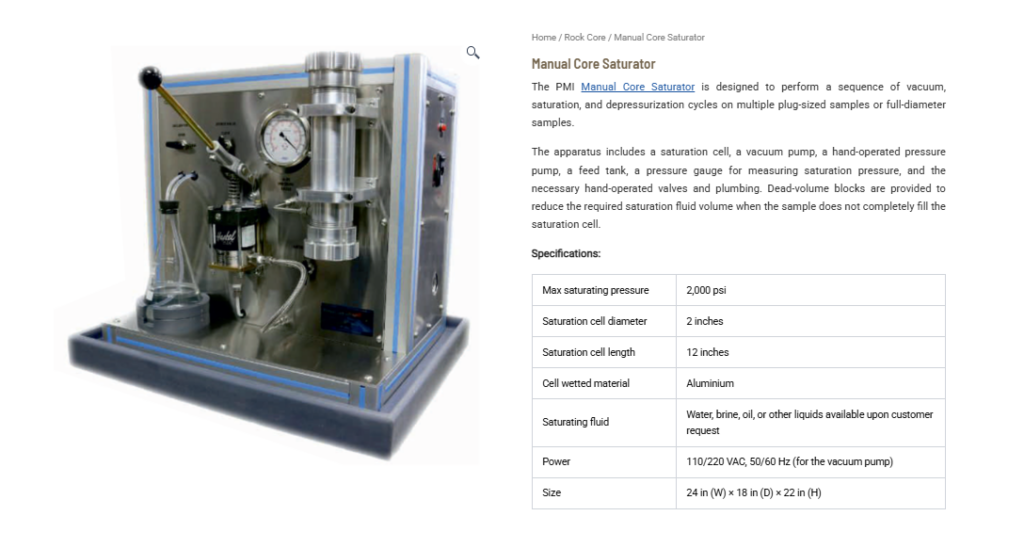
The Manual Core Saturator helps you with air removal, getting samples wet, and reducing pressure steps on rock core samples. You can use it in core analysis labs, research labs, and petroleum engineering programs. The system gives you an easy and good way to get your core samples ready before any tests.
What Is a Manual Core Saturator?
A Manual Core Saturator is a tool that people use in the lab. It helps you fill rock core samples with liquids like water, oil, or other test liquids. The system works in two steps. First, it takes out air trapped in the sample. It does this with a strong pull that gets the air out. Then, the system puts in the liquid. You can set the right pressure for this step.
When the rock is soaked well, the small holes in it fill up with liquid. This helps people in the lab get good data when they test the rock.
The Manual Core Saturator can be used with both:
- Plug-sized core samples
- Full-diameter core samples
This is a tool that you can use.
Why Core Saturation Matters
Knowing core saturation is a key part to help you see what is in the reservoir. The way you do this step can change how good your lab results will be.
Properly saturated samples help improve:
Permeability Testing
To get good fluid flow readings, make sure the fluid fills all the space in the pores. This will help the test give a true result.
Capillary Pressure Analysis
Good capillary pressure curves depend on keeping the same level of fluid in all parts of the sample.
Electrical Resistivity Measurements
The resistivity values can go up or down based on how much fluid is in there and how full it is with liquid. If you change the amount of fluid or how filled up it is, this can make the resistivity higher or lower.
Reservoir Simulation Studies
Lab results from wet samples help us know more about what is happening under the soil. These tests tell us a lot about the real conditions found below the ground.
Key Features of the Manual Core Saturator
1. Vacuum Saturation Capability
The system uses a cycle to take out the air from the rock sample before the fluid goes in. This step makes it easier for the fluid to get into the rock. It also helps the rock fill with the fluid better.
2. Controlled Saturation and Depressurization
Users can perform multiple cycles of:
- You use the pump.
- You soak with liquid.
- The pressure goes up.
- The pressure is kept down.
These steps help to be sure that the whole sample gets wet in the same way.
3. High Saturation Pressure Capacity
The Manual Core Saturator can handle high water pressure. It can be used for saturation up to:
2,000 psi
This helps water get into many kinds of rocks in the earth. It works well.
4. Integrated Laboratory Components
The system includes:
- A saturation cell
- A pump that takes out air
- A hand pump for adding pressure
- A tank that holds the liquid
- A pressure dial
- Valves and pipes
This setup gives you what you need to make your work with samples easy. It helps you work faster.
5. Dead-Volume Reduction Design
Dead-volume blocks help you use less saturation fluid. You use them when your samples do not fill up the whole saturation chamber.
This feature lets you use less fluid. It can also help your work be smoother and better.
6. Flexible Fluid Compatibility
The system can use different fluids to be full. Some of these fluids are:
- Water
- Brine
- Oil
- Specialized testing liquids
There can be different choices for fluids. It will depend on what the lab wants or needs.
Technical Specifications
| Specification | Details |
|---|---|
| Maximum Saturation Pressure | 2,000 psi |
| Saturation Cell Diameter | 2 inches |
| Saturation Cell Length | 12 inches |
| Cell Wetted Material | Aluminium |
| Saturating Fluids | Water, Brine, Oil, or Other Liquids |
| Power Supply | 110/220 VAC, 50/60 Hz (Vacuum Pump) |
| Dimensions | 24 in (W) × 18 in (D) × 22 in (H) |
Applications of the Manual Core Saturator
Core Analysis Laboratories
Get the rock samples ready so you can test things like how much fluid can go through them, how much empty space is in them, the pressure, and how well they resist electricity.
Petroleum Engineering Research
I can help you with studies that show how fluids and rocks work together. You will also get to know how to see what is inside the rocks.
Geological Investigations
Get the samples wet before you test rocks in the lab.
Enhanced Oil Recovery (EOR) Research
Set up the cores so you can do tests for fluid injection and flow.
Academic and Training Programs
Let students try out the main ways people get ready to work in the energy field. They will be able to do these things in a real and clear way.
Benefits of Using a Manual Core Saturator
Improved Testing Accuracy
Good saturation makes the test work better. It helps to keep changes down. It also makes the results steady, so you can trust them.
Enhanced Sample Preparation
Vacuum help is used to fill the holes with fluid. This way, the fluid goes into all the empty spots.
Operational Flexibility
You can use it with many sample sizes. You can also use it with many kinds of fluids.
Reduced Fluid Consumption
Features that reduce dead-volume can help to lower the cost of running a lab.
Durable Laboratory Design
This is built to last. You can use it over and over again. It works well for learning, research, or work.
Why Choose the Manual Core Saturator?
The Manual Core Saturator is a good and steady tool. You can use it to get rock core samples ready for lab tests. The tool has a system that pulls out the air to help with this job. It can also work even when there is high pressure. There are built-in parts that let you test as you work. This makes it easy to get the same good results time after time in all the jobs where you check cores.
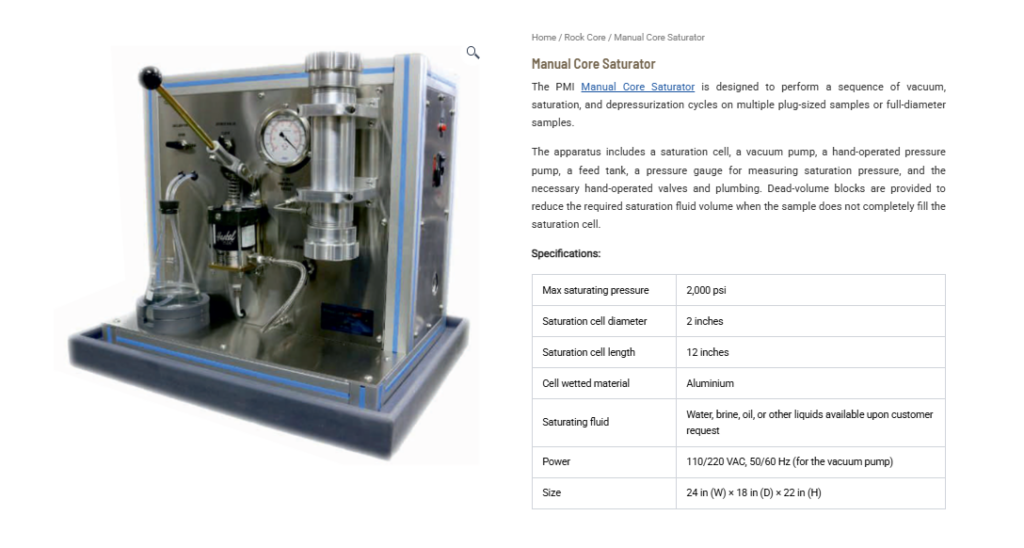
You can use the Manual Core Saturator for different things. It is good for work in petroleum engineering. People also use it to learn more about oil or gas places, and it is nice for practice in the lab. This machine gives you what you need to feel sure and to get samples set up the right way.
BLOG BY: PMIAPP