
Table of Contents
Unlocking Reservoir Performance Through Precise Permeability Measurement
Permeability is about how easy it is for a fluid to move through tiny gaps in rocks. In oil and gas, people use permeability to see if a place is good to work in. It helps them know how much oil or gas may come out. People also use this to make better plans for getting oil or gas. When they get good measurement of permeability, they also learn more about rocks.
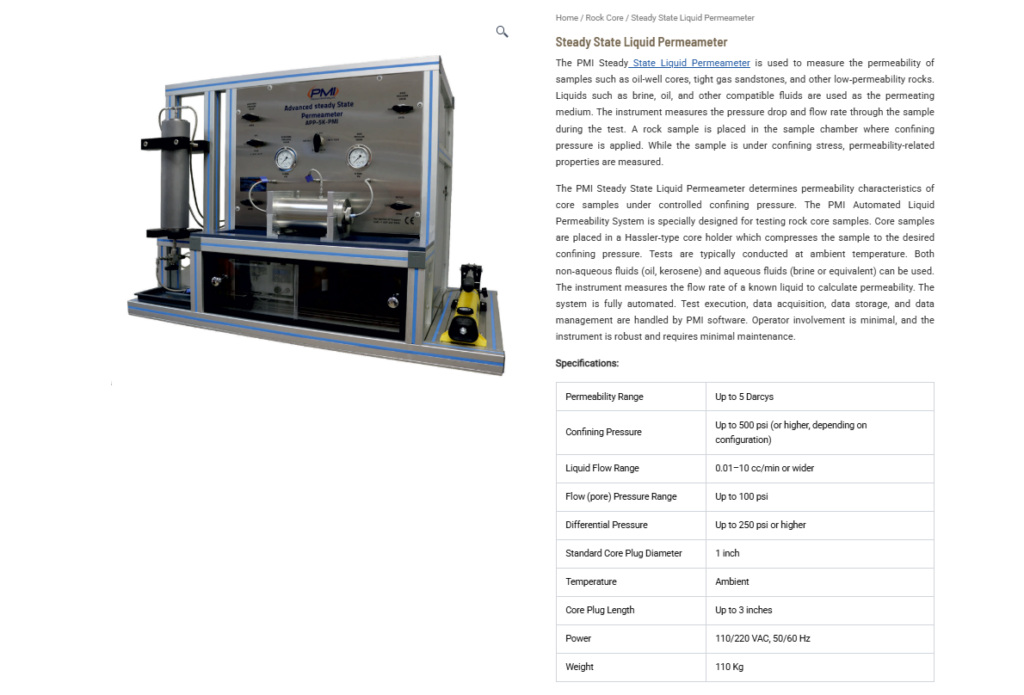
The Steady State Liquid Permeameter is a new tool you can use in the lab. It helps you see how much liquid goes through rock core pieces. It works when the pressure stays the same or does not change. The tool uses a smooth and steady flow to test these samples. This way, you get good and clear facts about how liquid moves in rock. People who work at oil and gas sites can use it. It is also good for earth science work, and for labs that check many types of rocks.
What Is a Steady State Liquid Permeameter?
A Steady State Liquid Permeameter is a tool that helps you find out how much liquid can pass through a rock core. The tool starts by making the rock sample wet with liquid. After that, you put the sample under a set pressure. The tool shows how the liquid goes through the sample while you test it. This will help you learn about the permeability of the rock.
The instrument checks the pressure drop and the flow rate all the time as the fluid moves through the core sample. These measurements help people use Darcy’s Law to find out what the permeability values are. This way, you get results that are very close to the real value.
The system is good when you want to see:
- Oil-bearing core samples
- Tight gas sandstones
- Low-permeability formations
- The study of what these rocks are made up of and how they hold oil and gas
- Research and development uses
How the Steady-State Method Works
The steady-state way is a common and easy method. You use it to see how simple it is for something to let things pass through it.
During testing:
- A rock core sample is placed in a Hassler-type core holder.
- A strong outside pressure is used to make the core feel like it is deep underground.
- A set amount of liquid goes in at a steady flow.
- The change in pressure across the sample is checked.
- Flow and pressure data are used to find out how easily fluid can move through the rock.
This way, you get good and steady permeability numbers. You will find these numbers come from real lab settings.
Key Features of the Steady State Liquid Permeameter
1. Accurate Liquid Permeability Measurements
The system is made to show clear results for permeability in rock core samples. These tests are done in set lab conditions.
2. Wide Permeability Testing Range
The instrument measures permeability values up to:
5 Darcys
This is good for many types of rock under the ground. Oil or gas can stay there.
3. Controlled Confining Pressure Testing
The Steady State Liquid Permeameter can handle confining pressures up to:
500 psi or higher, depending on configuration
This feature helps you copy the way a real one works. It also makes your data better.
4. Flexible Liquid Compatibility
The system can work with many types of test fluids. These are:
- Salt water
- Oil
- Kerosene
- Water-based liquids
- Other safe lab liquids
This way to work makes it easy for many people to use it for research. It also helps people when they check a water storage area.
5. Automated Testing and Data Management
The system can be used on its own. It has software for:
- Run the test
- Get the data
- Keep the data
- See how much can go through
- Write the report and look at it
Automation can help take away much of the work for the person who runs the machine. It also makes the measurements stay steady and good.
6. Hassler-Type Core Holder Technology
The core holder puts the same pressure all around the sample. This helps to show the stress that the rock feels when it is deep in the earth.
Technical Specifications
| Specification | Details |
|---|---|
| Permeability Range | Up to 5 Darcys |
| Confining Pressure | Up to 500 psi (or higher depending on configuration) |
| Liquid Flow Range | 0.01–10 cc/min or wider |
| Flow (Pore) Pressure Range | Up to 100 psi |
| Differential Pressure | Up to 250 psi or higher |
| Standard Core Plug Diameter | 1 inch |
| Core Plug Length | Up to 3 inches |
| Operating Temperature | Ambient |
| Power Supply | 110/220 VAC, 50/60 Hz |
| Weight | 110 kg |
Advantages of Steady-State Permeability Testing
Reliable and Industry-Proven Method
The steady-state method has been used for a long time. People often use it to see how liquids move through things that have tiny holes in them.
Accurate Flow Characterization
When you check the pressure and how the flow is going all the time, you get good and steady results for permeability. This helps people know what is happening and what to do next.
Reservoir Simulation Capability
Confining pressure makes the lab feel more like real oil and gas fields. With this, the tests you do in the lab can be close to what you get in the field. This is a good way to see how things work in oil and gas.
Automated Workflow
Built-in software is easy to use. It helps you get your work done and cuts down on the need to do things by hand.
Consistent and Repeatable Results
Automated systems and the right tools help tests give the same results when you use them on different samples.
Applications of the Steady State Liquid Permeameter
Oil and Gas Reservoir Characterization
See how easy it is for the fluids to flow in the rock. This helps you know how much oil or gas the rock can give. It also lets you see how fluids move inside the rock.
Core Analysis Laboratories
Get data about permeability for your work. Use this for your exploration, development, and management projects.
Geological Research
Look at the way fluid moves in the different rocks. See if it is easy or hard for the fluid to go through each kind of rock.
Enhanced Oil Recovery (EOR) Studies
See how well the fluid goes in when you pour it. Also, watch how the space below acts and changes as people look at it closely.
Academic and Research Institutions
I help with teaching, research, and more learning in petrophysics, oil field engineering, and rock science. You can get support with all the topics in this field. I am here to guide you if you want to know more, do better at your work, or keep up with new things in these areas.
Benefits for Laboratories and Research Facilities
The Steady State Liquid Permeameter has many good things:
- Measures permeability with high precision
- Works on its own and gathers data for you
- Can test many kinds of liquids
- Gives you confining pressure like real situations
- A steady way of testing you can trust
- Needs less help from the person running it
- Has strong tools to help you look at all your data
- Built to last in the lab
- Does not need much care or fixing
- Good for both research and company sample analysis
Why Choose the Steady State Liquid Permeameter?
The Steady State Liquid Permeameter blends old methods of seeing how liquids move with new tools that make it easy. It helps to see how much liquid can pass through an object when there is pressure. So, people working in oil labs, on research, or at testing centers find it a good tool to use.
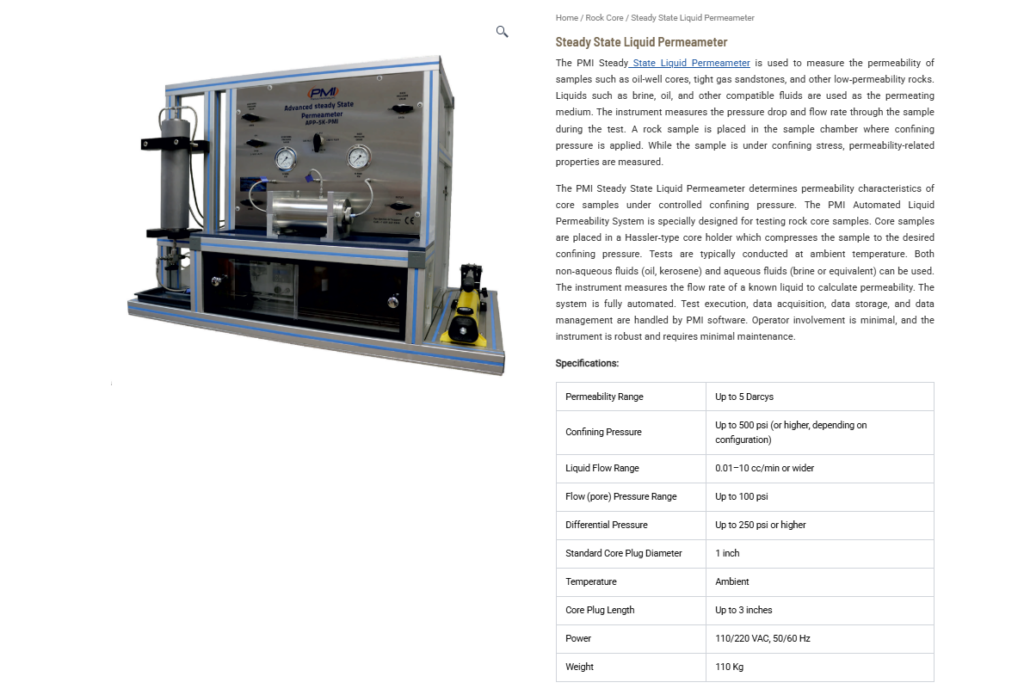
It does not matter if you use the system for a study, oil recovery, or research. The system gives you trusted data. It helps your team work well together. With this help, you can make good choices. Your work with the study will be better.
BLOG BY: PMIAPP