
Table of Contents
The Importance of Accurate Density Measurement
Finding the real density of things that are solid is key in many areas. These areas include petroleum engineering, mining, making medicine, ceramics, and science that looks at different stuff. When you know the real density, you get to learn what something is made of. This helps people find out about the tiny holes in it, how strong it can be, and if the quality is high.
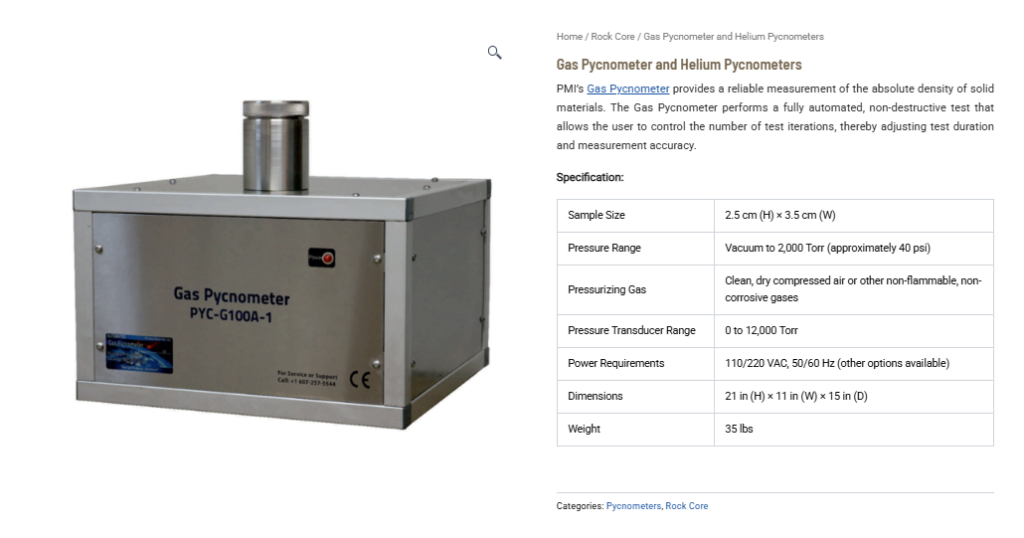
The Gas Pycnometer and Helium Pycnometers are used to find the true density of solid things. You use these tools and the sample will not get damaged. Many people use them in labs and for research. These tools give results that you can trust. They do tests by themselves and use new methods with pressure.
What Is a Gas Pycnometer?
A gas pycnometer is a device that you use in the lab to find out the volume and true density of a solid item. It works by checking how much gas moves in a closed area. Gas pycnometry gives a more exact volume for items that are not shaped in a regular way. It can do this without causing any damage to the item.
If people know the right amount and the weight of the sample, they can find the real value of absolute density. This helps them get the exact answer and have good results.
This system works well for things that have bumps, feel rough, or have stuff inside them. Normal ways to measure may not work for these things. But this system can do what you need.
How Gas and Helium Pycnometry Works
Gas pycnometers use Boyle’s Law. They do this by changes in pressure that are controlled. This helps them get the job done.
The process generally involves:
- Put a sample in the chamber made for this.
- Let a gas in the chamber slowly. Make sure you control how much goes in.
- Watch how the pressure goes up while gas fills the chamber.
- See how much space the gas moves around the sample to know how big it is.
- Use the weight and size of the sample to find the real density.
Helium is used a lot because it is very small. It can go into tiny holes and rough spots on the surface. This helps people get good numbers for volume.
Key Features of the Gas Pycnometer and Helium Pycnometers
1. Accurate Absolute Density Measurement
The system gives good, steady density readings for many types of solid things. It helps labs get results that are right and easy to do again.
2. Fully Automated Operation
The Gas Pycnometer does the testing on its own. This makes it easy to use. People do not need to do a lot.
Users can:
- Run the steps to test.
- Change how many times you check.
- Make the testing time better.
- Help to get a better check.
Automation helps the lab do more work. It makes sure testing happens the same way every time.
3. Non-Destructive Testing
Samples stay whole when you use this test. This is really helpful when the tool is used for important research. It also works well for rocks and things that need careful handling.
4. Flexible Accuracy Control
You can change how many times you do the test. This lets you see how close your results are to each other. It also tells you how much time the test will take. You can choose the way that fits your project best.
5. Wide Pressure Measurement Capability
The system can check pressure that starts at very low levels and goes up.
2,000 Torr (approximately 40 psi)
This range helps you choose the right amount for many things.
6. High-Precision Pressure Monitoring
The built-in pressure sensor helps you do different types of measurements.
0 to 12,000 Torr
You need to have good pressure data the whole time you do the test.
Technical Specifications
| Specification | Details |
|---|---|
| Sample Size | 2.5 cm (H) × 3.5 cm (W) |
| Pressure Range | Vacuum to 2,000 Torr (Approx. 40 psi) |
| Pressurizing Gas | Clean, Dry Compressed Air or Other Non-Flammable, Non-Corrosive Gases |
| Pressure Transducer Range | 0 to 12,000 Torr |
| Power Requirements | 110/220 VAC, 50/60 Hz |
| Dimensions | 21 in (H) × 11 in (W) × 15 in (D) |
| Weight | 35 lbs |
Applications of Gas and Helium Pycnometry
Rock Core Analysis
Find the grain density. Also, help with porosity calculations that people use to get information about what is in rocks.
Petroleum Engineering
Get good readings for density. These are useful for petrophysical checks. They also help study the area where rocks and minerals are found.
Geological Research
Look at the mineral samples, sediments, and rocks. Take your time and be careful. Make sure you get it right.
Material Science
Look at the density and size of metals, ceramics, mixtures, plastics, and new materials.
Pharmaceutical Testing
Look at powders, granules, and solid forms if you need to know about their density.
Quality Control Laboratories
Make sure that the work in the factory is always the same. You can get this by knowing the things you use very well.
Benefits of Using a Gas Pycnometer
High Accuracy
Gas displacement methods are better for finding volume than many other common ways. You can use this method to get good and simple results.
Repeatable Results
Automated testing steps help you make sure the results come out the same every time you check them.
Non-Destructive Analysis
Keep your important samples safe. At the same time, get the right data about their density.
Improved Laboratory Efficiency
Automated operation can help to reduce the manual work. It can also help to make testing faster.
Versatile Material Compatibility
This product is made to work for many things. You can use it with solids, powders, and granules. It is good to use with samples that come from the soil, too.
Why Helium Pycnometry Is Preferred
Helium is used a lot because it has some special things about it.
- The atom here is really small in size.
- It can get into tiny surface spots easily.
- It does not touch what you look at much.
- The way it measures things is clear and exact.
These things make helium pycnometry a good tool to find the real density in research and industrial labs. A lot of people use this method because it works well.
Why Choose the Gas Pycnometer and Helium Pycnometers?
The Gas Pycnometer and Helium Pycnometers are a quick and steady way to get the true density. They work by themselves, so you do not have to do much. They do not harm the samples. They also keep a close check on pressure. That is why people use them in labs to study core samples, new things, oil work, and to check product quality.
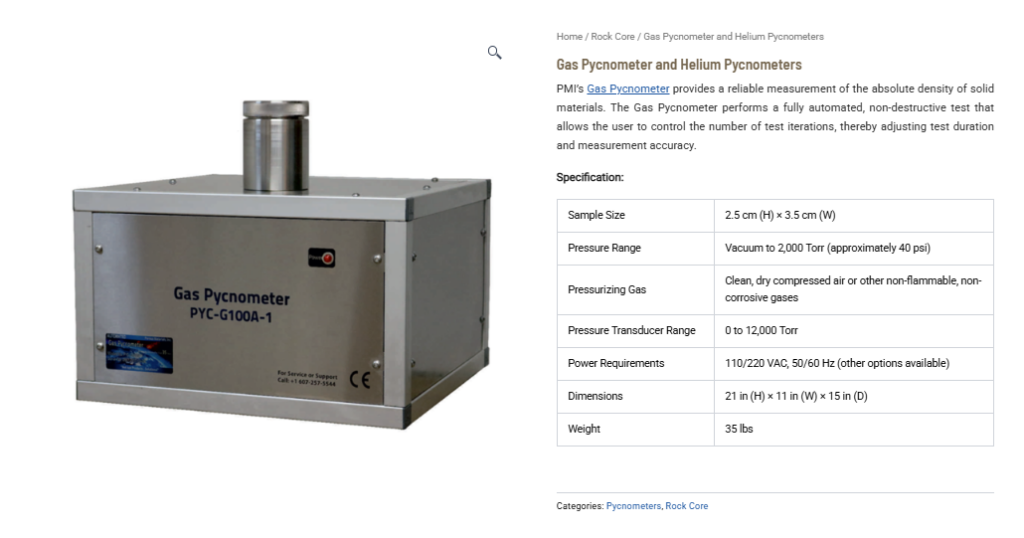
These tools give true results every time. They let you do the same job many times. You can use them to check rocks, new things, or things from factories. This is what labs want today.
BY: PMIAPP