
Introduction
It is important to understand how gases work with porous materials. This helps people a lot in the energy, carbon capture, environment, and when they make new materials. Good gas adsorption measurements give us key details about storage space. They also show how easy a gas can move through, what the pore layout is, and how gas moves in these materials.
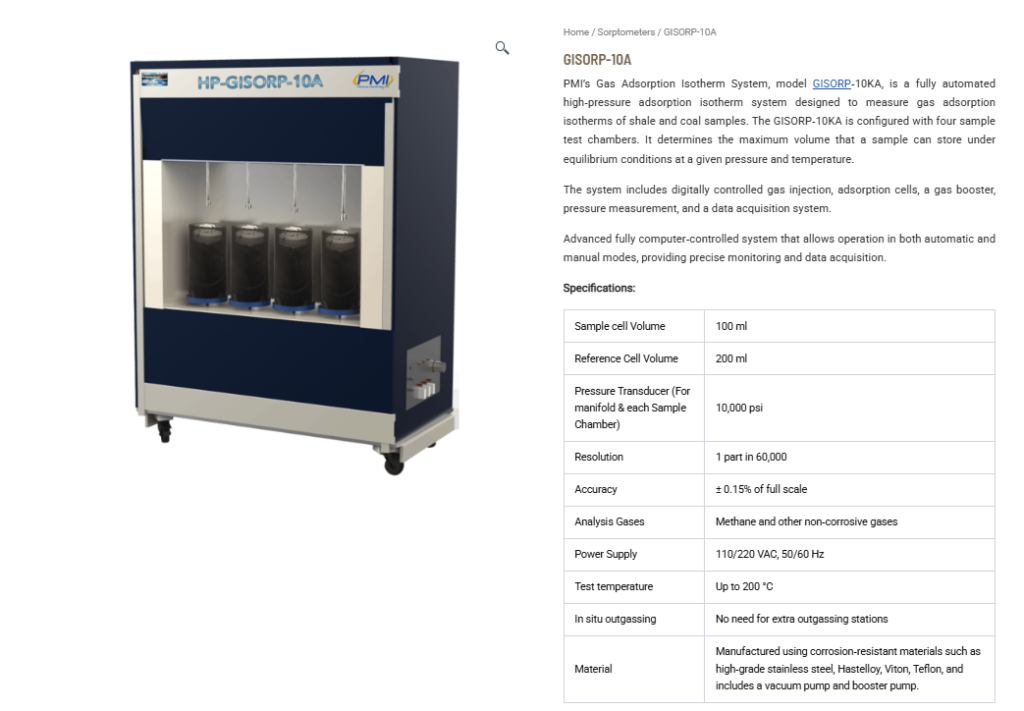
The GISORP-10A High-Pressure Gas Adsorption Isotherm System is a tool that you turn on to let it work. It tells you how much gas stays on things at high pressure. You can use it for testing shale, coal, and the other stuff with small holes. This tool helps you see how much gas the item can take in. You can pick the pressure and the temperature. People use the GISORP-10A to find out the most gas each thing can hold.
The GISORP-10A works with a smart computer. The computer takes care of all parts of the system. It checks the pressure each time. It collects data by itself, so you will not need to do this. This helps it give steady and good results as it checks how much gas goes in. People use it in a lab or at a factory.
What is a High-Pressure Gas Adsorption Isotherm System?
A gas adsorption isotherm system shows how much gas a thing can take in. It looks at this at different pressures but keeps the same temperature for every check. These checks are called adsorption isotherms. They help you see how gases stay on the surface and go into the small spaces inside what you are testing.
The GISORP-10A is built to help with tests for high-pressure adsorption. This tool lets people check and find out about:
- Gas storage space
- Adsorption balance
- Sorption way
- Pore entry
- Storage review
- How it works when the pressure goes up
These facts help us make things better. We can use them for energy, gas storage, and new ideas.
Key Features of the GISORP-10A
Fully Automated Operation
The GISORP-10A comes with a smart computer setup. It can run all parts of the adsorption testing by itself. These steps include:
- Put in the gas.
- Follow the pressure rules.
- Collect the data.
- Find the balance.
- Write down the results.
Automation makes work easier for the person using the machine. It helps you keep things the same each time and lets you do things the same way every time.
High-Pressure Adsorption Analysis
The system is made for hard adsorption testing. It can do well with pressures up to:
10,000 psi
This feature is good for looking at rocks and things found in places with very high pressure.
Four Independent Test Chambers
The GISORP-10A comes with four test chambers. You can use them to test more than one sample at the same time.
Benefits include:
- The team works more in the lab.
- Projects get done faster.
- They look at what is being tested next to each other.
- Less time is needed for tests.
Precision Pressure Measurement
The system uses pressure sensors. These sensors work well. They check both the manifold and each sample chamber.
Key performance specifications include:
- The pressure transducer can read pressures up to 10,000 psi.
- It can show results as small as 1 in 60,000.
- The reading will stay within plus or minus 0.15% of the full range.
These features help you get measurements that are very reliable when it comes to adsorption.
Automated Data Acquisition
The built-in data system keeps checking and saving the test details all the time. It does this during the whole experiment.
Collected data includes:
- Pressure
- Temperature
- Points where the gas goes in and out are the same
- Gas taken in
- Test time
This large set of data lets us see more about stuff. We can use it to make reports.
How the GISORP-10A Works
The GISORP-10A checks how much gas is taken in. It does this by using a way that looks at the amount of gas or how much space the gas takes up.
The process typically involves:
- Getting the sample ready and putting it in.
- Doing outgassing when it needs to be done.
- Putting in a set amount of gas.
- Watching how the pressure goes up or down.
- Finding the point when gas and the sample balance each other.
- Figuring out how much gas is added.
- Making graphs to show how much gas stays with the sample.
The system does all these tasks on its own. It keeps the test settings right while it works.
Applications of the GISORP-10A
Shale Gas Research
The GISORP-10A is used a lot to check how gas stays on shale. Many people use this for this kind of work.
Researchers can determine:
- Gas storage capacity
- Adsorption characteristics
- How well the place holds gas
- Estimation of how much gas there is
Coalbed Methane Studies
Coal has a lot of methane in it. This gas stays with the coal and does not go away.
The system helps researchers analyze:
- The amount of methane that coal can take in
- How methane leaves the coal
- What makes up a coal seam
- The chance to get gas out
Carbon Capture and Storage (CCS)
Adsorption measurements help us see how well some materials work for carbon capture technologies. These tests are important because they show if a material can take up carbon in a good way.
Applications include:
- The CO₂ adsorption studies
- Research on carbon sequestration
- Sorbent evaluation
- Environmental monitoring
Porous Material Characterization
The GISORP-10A helps people make and test new types of porous stuff like:
- Activated carbons
- Zeolites
- MOFs
- Adsorbents
- Catalysts
Energy Storage Research
Researchers use adsorption isotherm analysis to see how these gas storage materials work for:
- Natural gas storage
- Hydrogen storage
- Other energy systems
In-Situ Outgassing System
The GISORP-10A has its own outgassing features. So, you do not need to use another outgassing station.
Advantages include:
- There is less handling of the sample.
- The way to test things is better.
- There is a lower risk for contamination.
- The steps in the lab are smoother.
This feature helps you check that the samples are set up the right way before you begin the adsorption tests.
Durable Construction for Demanding Applications
The system is made with good parts. These parts will not rust soon. It comes with:
- Stainless steel
- Hastelloy
- Viton
- Teflon
The design also incorporates:
- The vacuum pump
- The gas booster pump
- The high-pressure piping system
These parts last for a long time. They help well, no matter how hard things get in research places.
Technical Specifications
| Parameter | Specification |
|---|---|
| Sample Cell Volume | 100 ml |
| Reference Cell Volume | 200 ml |
| Pressure Transducer Range | 10,000 psi |
| Resolution | 1 Part in 60,000 |
| Accuracy | ±0.15% of Full Scale |
| Analysis Gases | Methane and Other Non-Corrosive Gases |
| Power Supply | 110/220 VAC, 50/60 Hz |
| Test Temperature | Up to 200°C |
| In-Situ Outgassing | Standard Feature |
| Construction Materials | Stainless Steel, Hastelloy, Viton, Teflon |
| Included Equipment | Vacuum Pump and Booster Pump |
Benefits of the GISORP-10A
High Measurement Accuracy
The latest pressure tools help you get data about adsorption that you can trust. You will be able to use this data again later.
Increased Throughput
Four test rooms run at the same time. This helps the lab do work faster and makes the project time shorter.
Automated Operation
Computer-controlled testing helps make things easier for people. There is less need for someone to step in. It can also cut down on mistakes that people make.
Broad Application Range
This can be used for things like rocks, materials that soak up things, helping relationships grow or improve, taking in carbon, and storing power.
Integrated Sample Preparation
The built-in outgassing makes the work easy for you. It helps you get the same reading each time.
Why Choose the GISORP-10A?
The GISORP-10A High-Pressure Gas Adsorption Isotherm System gives you good results each time you use it for gas analysis. This system uses new automation to help you get what you need. It runs at high pressure and gives numbers you can trust. The machine is built strong. It will last for years and work well for you.
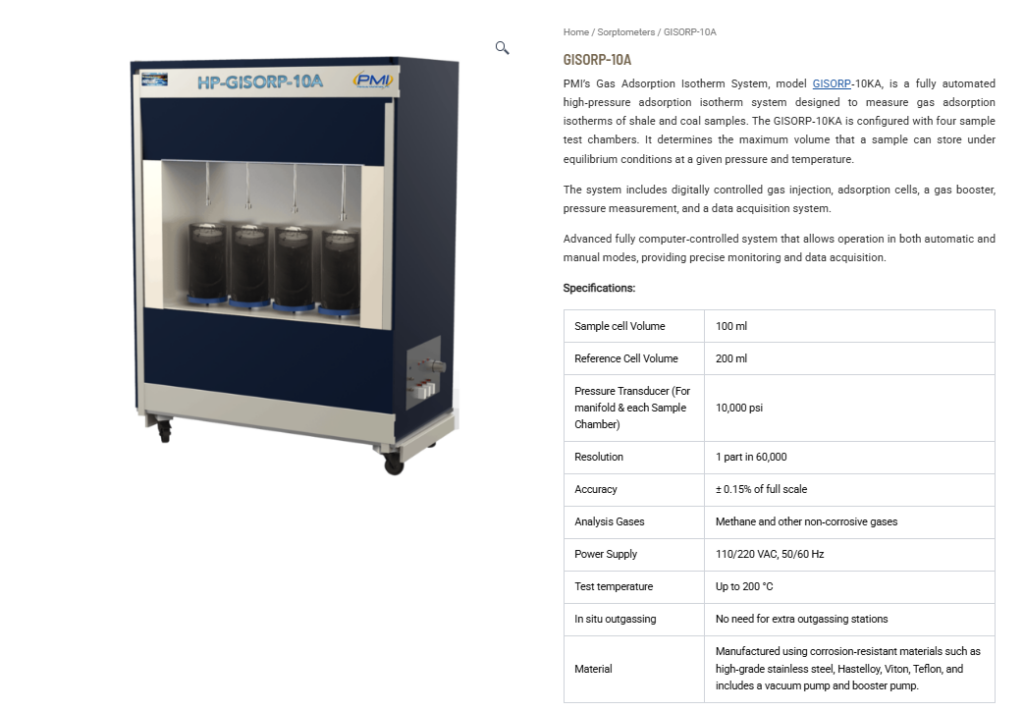
If you study shale reservoirs, coalbed methane, carbon capture materials, or new porous structures, the GISORP-10A is a tool you can trust. This equipment is reliable. It works well for this kind of adsorption research that people need now.
It can work well even when the pressure is up to 10,000 psi. It also lets you gather data by itself. You can use it to test several samples at the same time. This makes it a good pick for research labs, universities, energy companies, and places where people do industrial R&D.
BY: PMIAPP