
Table of Contents
Introduction
You need to check density the right way in many different areas. These areas include science, making drugs, ceramics, powders, and jobs where people test for quality. If you learn the real density of something, you can know what it is made of. You can also find out how many small holes are in it. This helps you check its quality and how well it can work.
The Gas Pycnometer and Helium Pycnometers from PMI show you an easy and safe way to find the whole density of solid things. These work by using gas to find out how much space the sample takes up. You get the volume and density, but you do not change the thing you test or hurt it.
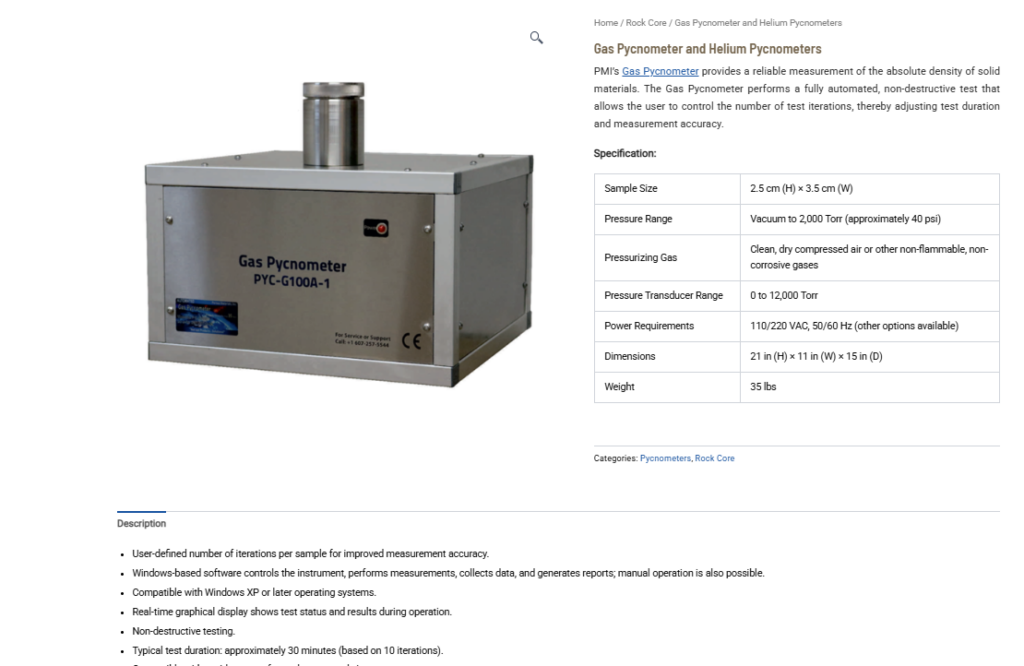
This Gas Pycnometer from PMI is made for labs, research centers, universities, and places that do industrial tests. The device helps people get the same results every time when they check how dense something is. You can also change the test to fit what you need. It will collect all your test data by itself.
What is a Gas Pycnometer?
A Gas Pycnometer is used to find the true volume and actual density of solid things. It works by checking how much gas is sent out in a chamber that is measured and set before you start.
Gas pycnometry is not like other ways that people use to find the density. With other ways, the shape or the size of what you look at can change what numbers you get. Gas pycnometry does not do that. It measures the true space that your sample takes up.
This technique is particularly valuable for:
- Powders
- Granules
- Porous materials
- Geological samples
- Ceramics
- Pharmaceuticals
- Composite materials
Gas pycnometers give correct facts about density. You use this data in research. It helps you check quality. You can use it to make new products too.
Why Use Helium for Density Measurement?
Helium is a gas that a lot of people use in pycnometry. Many choose it for this because it has some special features:
- The atomic size is very small.
- It can spread fast.
- It does not change when there is a chemical change.
- It can go into fine pores and small bumps on the surface.
These things help helium get into very small spaces in something. Because of this, you can get good results for the real volume and the true density.
A lot of people say that helium pycnometry is a good way to find the density. It is also trusted by those who work with advanced uses.
Key Features of PMI Gas Pycnometers
Fully Automated Operation
The system can check the density by itself. It does not need help from people.
Key automated functions include:
- Pressure handling
- Data gathering
- Volume finding
- Density checking
- Report making
This helps the lab get more things done. It also helps bring down the chance that people can make mistakes.
User-Defined Test Iterations
Users can choose how many times they want to look at each sample.
Benefits include:
- You get better results when you measure things.
- Each time you test, you get the same results.
- The steps for testing can change to fit what you need.
- You feel sure about the results you get from the test.
If people run the test more times, they can get better results. The answers will also be more clear for jobs that matter a lot.
Non-Destructive Testing
A good thing about gas pycnometry is that it does not change the sample. It will not hurt or damage it at all.
This allows:
- Keep the sample safe
- Do the test one more time
- Do more checks after we look at how dense it is
- Use less of the sample so there is less waste
Advanced Windows-Based Software
The integrated software lets you handle every part of the testing process.
Software capabilities include:
- Use of tools
- Automated checking
- Data collection
- Real-time viewing
- Graph showing results
- Report making
Manual operation is also available when required.
Real-Time Graphical Monitoring
The instrument shows a screen. You can see:
- Test progress
- Pressure behavior
- Measurement status
- Density calculations
This lets people get answers fast when they test. They have feedback right away as they move through the steps.
How Gas Pycnometry Works
Gas pycnometry is based on Boyle’s Law. It looks at the pressure and volume to find what you need.
The testing process generally involves:
- Put the sample in the chamber that you have set up.
- Fill the chamber with the gas you want.
- Watch the pressure go up after you fill the space with gas.
- Find out the volume of the sample by seeing how much gas it moved out.
- Get the right density of the sample by using the mass and the volume you found.
The process is done with care. You can do this more than one time to get a better measurement.
Applications of Gas and Helium Pycnometers
Geological and Rock Core Analysis
Gas pycnometers are used a lot in geoscience. People use them to measure:
- Rock density
- Core sample tests
- Site check
- How many spaces in rocks
- Layer checks
Pharmaceutical Industry
Density measurements help optimize:
- Powder formulation
- Tablet manufacturing
- Drug delivery systems
- Quality assurance programs
Ceramics and Advanced Materials
Researchers use pycnometers to characterize:
- Technical ceramics
- Heat-proof materials
- Mixed materials
- Nanomaterials
Powder Metallurgy
Accurate density data is critical for:
- Check the metal powder to see if it is good.
- Try to make the sintering work better.
- Look to see if the product quality is good.
Research and Academic Laboratories
Universities and research places use gas pycnometers to:
- Learn about what the material is like
- See how many gaps or holes you find
- Look at the surface and feel it with your hand
- Do some research yourself through hands-on projects
Technical Specifications
| Parameter | Specification |
|---|---|
| Sample Size | 2.5 cm (H) × 3.5 cm (W) |
| Pressure Range | Vacuum to 2,000 Torr (Approximately 40 psi) |
| Pressurizing Gas | Clean, Dry Compressed Air or Other Non-Flammable, Non-Corrosive Gases |
| Pressure Transducer Range | 0 to 12,000 Torr |
| Power Requirements | 110/220 VAC, 50/60 Hz |
| Dimensions | 21 in (H) × 11 in (W) × 15 in (D) |
| Weight | 35 lbs |
Advantages of PMI Gas Pycnometers
Exceptional Accuracy
There are new tools that you can use to measure pressure. These tools give you very exact numbers. This helps a lot when you need to know the density.
Flexible Testing Procedures
User-set loops help to make the measurement more right. You can change the loops so they match what your sample needs.
Fast Analysis
The test will take about 30 minutes most of the time. It can be more or less time, based on how many times you do it.
Reliable Data Collection
Automated software helps people check things in the same way every time. It also gives clear reports that are easy for us to read.
Long-Term Sample Preservation
Non-destructive analysis lets you keep your good samples. You do not lose them, and you can use them again for more tests.
Industries That Benefit from Gas Pycnometry
- Oil and Gas
- Mining and Rocks
- Pharmaceuticals
- Ceramics Manufacturing
- Powder Mixing with Metals
- Materials Science
- Chemical Processing
- School Research
- Environmental Science
- Making Sure Things are Good in Factories
Why Choose PMI Gas Pycnometers?
PMI’s Gas Pycnometer and Helium Pycnometers let you find the true density of solid things in a simple and reliable way. The system works on its own. You pick the settings that you need, and there is advanced software in it. Your sample does not get harm. This will give you the right results that you want for all your research and factory work now.
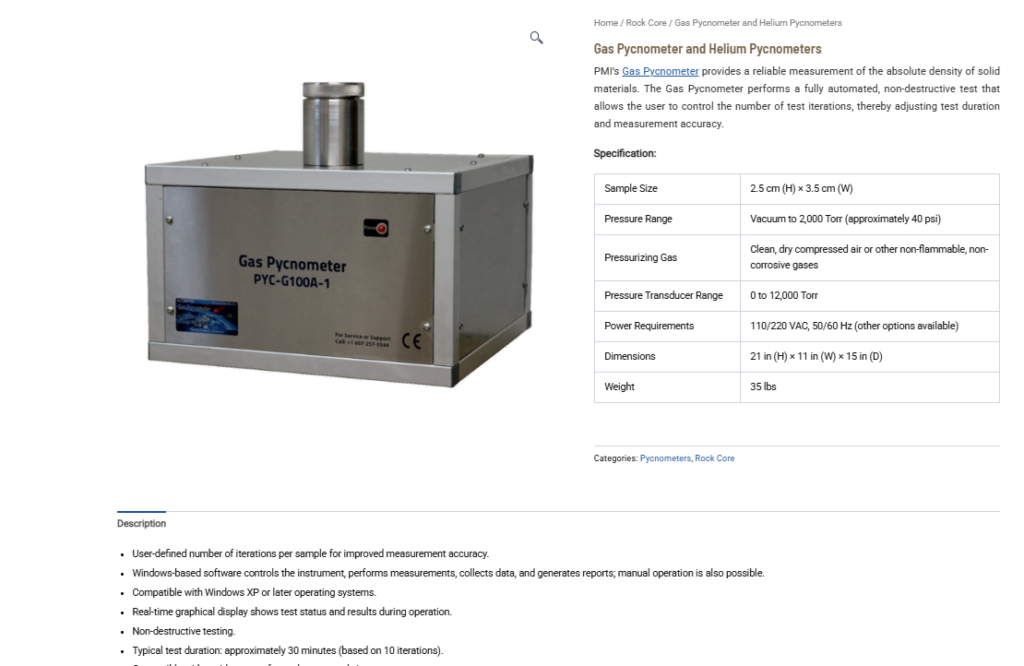
It does not matter if you need to look at rock core samples, pharmaceutical powders, ceramics, or new materials. PMI’s Gas Pycnometer gives labs good and steady answers about density. This data helps labs get better results, keep up with quality, and make new items.
BY: PMIAPP