
Table of Contents
Understanding Capillary Pressure in Core Analysis
Capillary pressure is important because it shows how oil, gas, or water moves in the rocks in a reservoir. It helps you know how much oil or gas you can get, how much water stays inside the rocks, if the reservoir is good, and how long it can give oil or gas over time. When you check capillary pressure the right way, you learn about the small spaces in the rocks, how fluids go through them, and how much oil or gas you may get out.
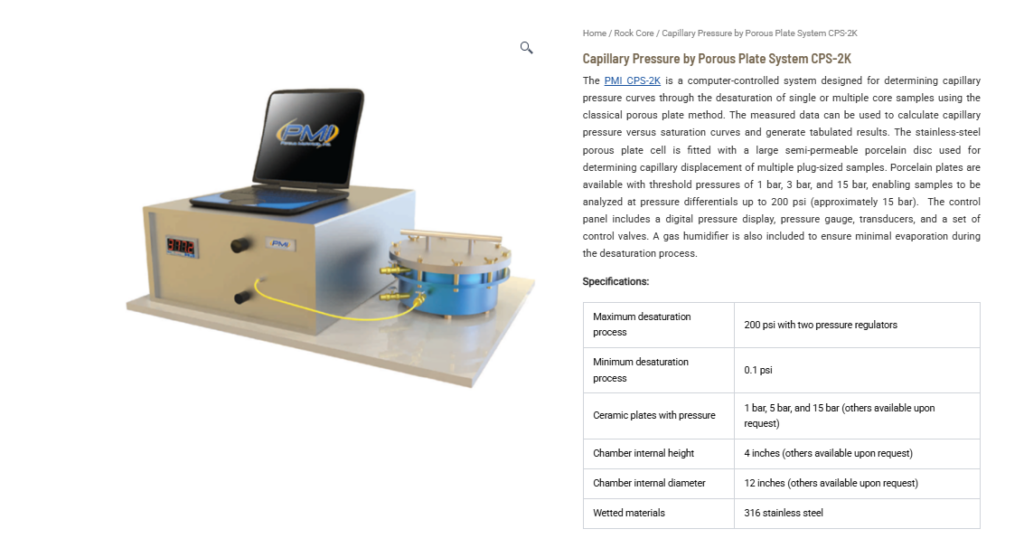
The Capillary Pressure by Porous Plate System CPS-2K is a new lab tool. A computer controls this system and it helps people get pressure values from rock core samples. The CPS-2K uses a well-known porous plate method to do this. It is good for work in petroleum research, checking reservoirs, and when people study rock core samples in labs.
What Is the CPS-2K Porous Plate Capillary Pressure System?
The CPS-2K is a special system. It helps people check how pressure and water work together in small spaces in rocks. It does this by measuring pressure and dryness. A known way, called the porous plate method, is used here. For each test, people use rock core samples. They take water out from each one slowly. A change in pressure is put on the rocks with a plate. This plate lets some things go through but not others.
The information from this is important for people in research and engineering. They use it to create:
- Small graphs that show the pressure in the pores
- Pressure checked against how much the space is filled
- Models that show how the fluid moves in the rock
- Checks for how good the rock is
- Curves that show how full the rock is for checking
The system can be used with one core sample or with several. This lets you use it for many types of lab work.
Why Capillary Pressure Measurements Matter
Capillary pressure data is very important to see how fluids move in rocks with small holes. These numbers help people who work in this field.
Evaluate Reservoir Quality
See how well a rock layer can hold oil and gas, and how good it is at letting them come out.
Estimate Fluid Saturation
Learn how oil, gas, and water get into small holes in rocks deep under the earth.
Characterize Pore Structure
Look at how big the holes in the rock are. Also, see how the rocks fit together. The size of the holes and the way the rocks meet say a lot about the way fluid can move in the rock and go through it.
Improve Reservoir Models
Get better at doing the work with reservoir simulations and at making production forecasts.
Support Enhanced Recovery Strategies
Look for ways to get more oil and gas out of the ground. Try to also use what you have in a better way. Use good steps when you handle the oil and gas work too.
Key Features of the CPS-2K
1. Computer-Controlled Operation
The CPS-2K has a modern computer system. It helps people use the right pressure and manage the desaturation steps in the right way. This automatic system makes the readings steady each time. People do not need to do as much by hand.
2. Classical Porous Plate Technology
The system uses what people know as the porous plate method. Many people say this is the best way to get pressure curves and pressure-saturation data. A lot of people in the industry trust this method.
3. Multi-Sample Testing Capability
The porous plate cell lets people test two or more small rock samples at the same time. This makes the lab work go faster. In this way, they can get more samples checked in less time.
4. Wide Pressure Testing Range
The CPS-2K can perform desaturation testing from:
- Minimum pressure: 0.1 psi
- Maximum pressure: 200 psi
This range can be used to study pressure up close. You can use it on many types of rocks in the earth that have oil or gas in them.
5. High-Quality Semi-Permeable Porcelain Plates
The system uses big porcelain discs. These discs let some things pass through, but they stop other things. They help people see what the pressure is in small spaces.
Available pressure threshold options include:
- 1 bar
- 5 bar
- 15 bar
If you want something else, you can ask to get more plate setups. These are made to help with special tests and what you need.
6. Integrated Pressure Monitoring
The control panel includes:
- Digital pressure display
- A pressure meter that shows correct readings
- Pressure sensors
- Pressure valves to set the right pressure
These parts help keep the pressure steady. They make sure it is the same every time there is a test.
7. Built-In Gas Humidification System
A gas humidifier helps stop fluid from getting lost when you test for desaturation. This makes the test more reliable. It also keeps your sample safe.
Technical Specifications
| Specification | Details |
|---|---|
| Maximum Desaturation Pressure | 200 psi |
| Minimum Desaturation Pressure | 0.1 psi |
| Ceramic Plate Pressure Ratings | 1 bar, 5 bar, 15 bar |
| Chamber Internal Height | 4 inches |
| Chamber Internal Diameter | 12 inches |
| Wetted Materials | 316 Stainless Steel |
| Sample Type | Plug-Sized Rock Core Samples |
| Testing Method | Porous Plate Capillary Pressure Measurement |
Advantages of the Porous Plate Method
The porous plate method is still one of the
Accurate Saturation Data
Get pressure-saturation links that you can trust. People use these links when they check a field.
Realistic Reservoir Simulation
See how the fluids move when you put them in a lab.
Excellent Repeatability
Use the same way to measure each time you do research. This helps you get good results. It also lets you look at studies and see how they are alike or different.
Broad Industry Acceptance
Many oil companies use this method. A lot of research groups use it as well. Labs around the world that test rock samples use this method too.
Applications of the CPS-2K
Reservoir Characterization
See how the capillary pressure goes up or down. This helps you know more about how the field works. It also shows how the fluids go and move in it.
Core Analysis Laboratories
Get the good pressure numbers you need for your work in finding and getting oil and gas.
Petroleum Engineering Research
Get help with higher studies that help you see how much liquid is in rock. You also get to know how things move out of the rock. The studies show how the rock and the liquid work together.
Geological Investigations
Look at the pores. You can see how the small tubes work in the different rocks.
Academic and Educational Programs
Let students get some practice in the lab. This is a good way for people to learn about petrophysics. It also helps those in oil and gas engineering. They will work with testing core samples, which is an important skill.
Benefits for Research and Laboratory Operations
The CPS-2K gives you many good things when you use it.
- A computer can run the testing.
- It can test many samples at one time.
- It has a high-quality porous plate design.
- It can work with many levels of pressure.
- It can read the pressure well.
- It cuts down on sample evaporation.
- It has a strong stainless-steel build.
- It makes good pressure-saturation curves.
- There are many choices for ceramic plates.
- It helps the lab get more work done.
Why Choose the CPS-2K?
The Capillary Pressure by Porous Plate System CPS-2K uses a reliable porous plate style and new automation features. You can set the pressure to a certain number. It shows you clear pressure curves. You can test several samples at once. It also gives help with full study work. This tool works well for people who work in petroleum labs and research centers.
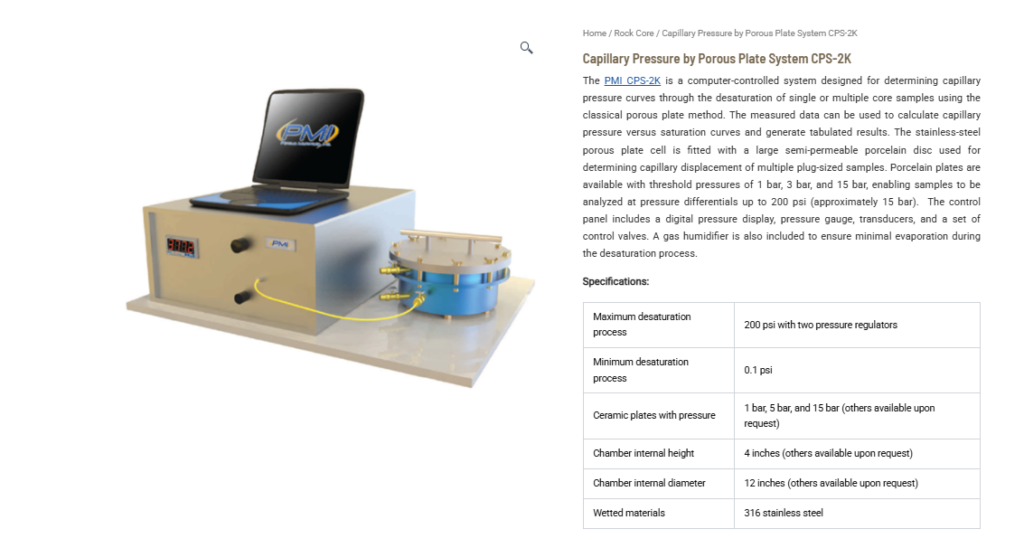
You can use the CPS-2K when you need to look at a tank, learn new things, or when you want help with testing cores. The CPS-2K gives the right results every time. People can trust it, and it works well for all your pressure tests.
BY: PMIAPP