
Table of Contents
Understanding Capillary Pressure in Reservoir Rock Analysis
Capillary pressure is one of the main things to look at in petrophysics and oil field work. It helps show how oil, gas, and water move in rock that has very small spaces in it. When people know more about capillary pressure, they can see how good the rock is, how much fluid is inside, how much people can get out, and what the holes in the rock look like.
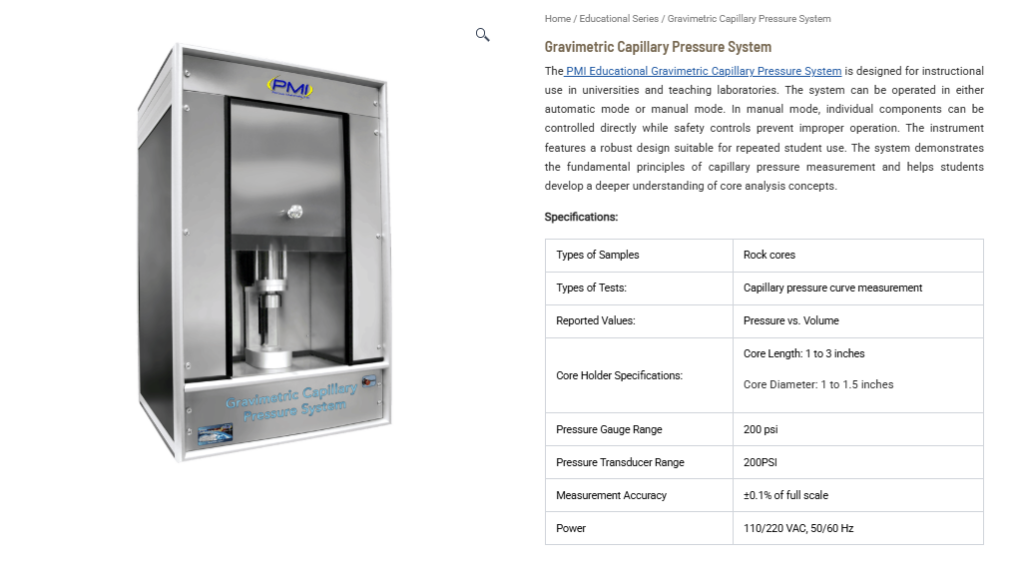
The Gravimetric Capillary Pressure System helps you see and measure how this type of pressure works inside pieces of rock. The system is made for schools, research rooms, and for people who want to work as oil engineers. You can use this tool by yourself to learn about this important idea in core analysis.
What Is a Gravimetric Capillary Pressure System?
The Gravimetric Pressure System is a tool people use in the lab. It helps you see how pressure and volume change in rock core samples. With this system, you can see how fluids move in rocks. You will also be able to see how one fluid pushes out another fluid in the small spaces inside the rocks. The system shows how fluids go through the tiny holes in rocks.
This system helps with teaching and learning. You can use it in automatic mode or manual mode. It works well for classroom shows. It is also good for lab work and for research tasks.
Key Features of the Gravimetric Capillary Pressure System
1. Designed for Educational Excellence
The system is for the universities and technical schools. It is also for the schools that teach oil and gas. The system helps students see how pressure works in small spaces. Students can learn well by doing simple hands-on experiments on their own.
2. Automatic and Manual Operation Modes
Users can choose between:
- The automatic mode is good when you want to do testing fast and with ease.
- The manual mode helps you learn more about the work. It also makes each step easier to handle.
This setup helps teachers and people doing research to change experiments. They do this to match the changes with learning goals and what the lab needs.
3. Safe and User-Friendly Design
The built-in safety controls will stop the machine if you use it the wrong way. These controls make it safe for you to test things on it. Each part can be used alone when you work by hand. This helps people practice and learn in a good way.
4. Accurate Pressure Measurement
The system delivers reliable measurements with:
- The pressure meter can show up to 200 psi.
- The pressure sensor can read as high as 200 PSI.
- The reading will be right within plus or minus 0.1% of the whole scale.
These features make the tests fair every time. So, you get results you can trust.
5. Flexible Core Sample Compatibility
The instrument can hold different types of rock core samples. This means people can use it for many things, like learning and research work.
6. Durable Laboratory Construction
The system is built with parts that do not rust. So, it will last a long time. You will find it easy to care for this system. It does not take much work to keep it in good shape.
Technical Specifications
| Specification | Details |
|---|---|
| Sample Type | Rock Cores |
| Test Type | Capillary Pressure Curve Measurement |
| Reported Values | Pressure vs. Volume |
| Core Length | 1 to 3 inches |
| Core Diameter | 1 to 1.5 inches |
| Pressure Gauge Range | 200 psi |
| Pressure Transducer Range | 200 PSI |
| Measurement Accuracy | ±0.1% Full Scale |
| Power Supply | 110/220 VAC, 50/60 Hz |
Educational Benefits of Capillary Pressure Testing
Capillary pressure analysis gives good data about:
Reservoir Fluid Distribution
Students can see how fluids move into the small spaces in rocks. They can also find out what helps keep the fluid inside the rocks. It is clear how much fluid will stay in there.
Pore Structure Evaluation
Capillary pressure curves help us see the size of tiny holes in the rock. They also show how these holes are joined. This helps us know if the rock is good for holding oil or gas.
Enhanced Reservoir Characterization
The data from this lets people see how fluids move. It also helps you look at rock shapes in a simple way.
Hands-On Learning Experience
The system makes hard ideas easy for students. This helps them know more about how this type of engineering works in real life.
Applications of the Gravimetric Capillary Pressure System
Petroleum Engineering Education
The system shows the main ways that people use to know how much oil and gas is in the earth. It also explains how they get this oil and gas out.
Core Analysis Training
Students and lab staff can take part in practice for pressure checks. They will read the results and get to know them.
Geological Research
Researchers can see how fluids and rocks work with each other. They also see how the fluid moves in small gaps inside different types of rocks.
Laboratory Demonstrations
The instrument is a good tool for teaching. A lot of universities and training centers use it. People can learn from it.
Advantages for Educational and Research Laboratories
The Gravimetric Capillary Pressure System has many good points:
- It is simple and fast to set up a sample.
- You can test the sample by hand, or let the device do it for you.
- The numbers you get are high, and you can trust them.
- There are checks in the device to keep you safe.
- There is less chance for people to get things wrong when putting in the sample.
- The device is small, but strong.
- It does not need a lot of care to keep working well.
- You can use it with many fluids for testing.
- It is made to last and will not rust.
Why Choose the Gravimetric Capillary Pressure System?
If you need a good way to see capillary pressure at your school or company, the Gravimetric Capillary Pressure System can be a good choice. It is made to be right, safe, and easy to use. You can use it in many ways, and the parts are built to last for many years. The tools work well for teaching, training, and learning about petrophysics, and how oil fields work.
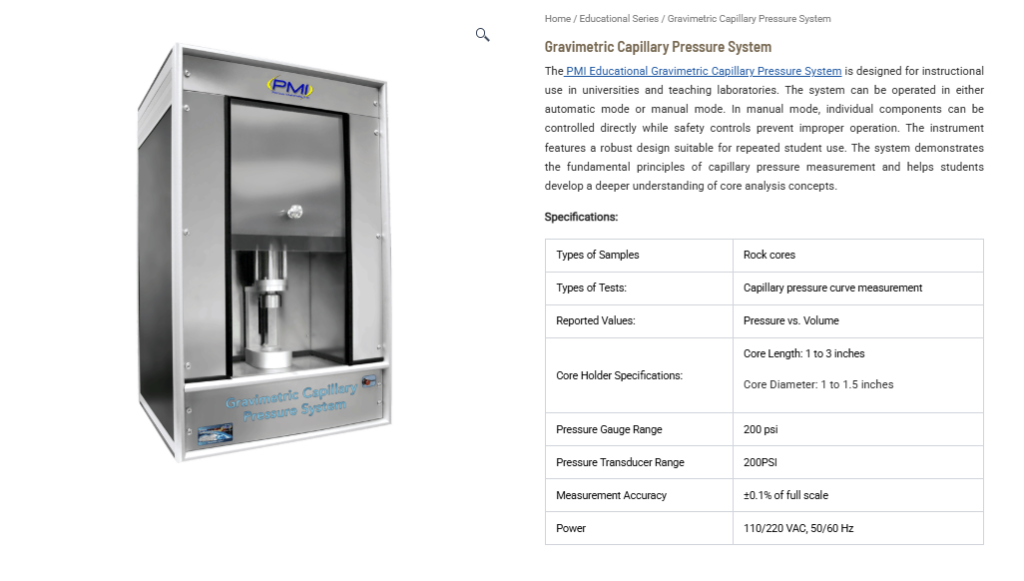
This system is found in many different places. You can see it in labs at universities. It is used in work with oil, and where people study rocks. The system lets you practice and collect good data. It helps you learn about the way pressure moves in rocks that have tiny holes.
By: PMIApp