
Table of Contents
Accelerating Porosity and Permeability Testing with Automation
In the oil and gas field, geothermal work, carbon storage, and geological research, you have to measure rock and its properties the right way. This lets you know how the area works. The two most important things to look at are porosity and permeability. These numbers tell you if an area can hold fluids and if those fluids can move through it.
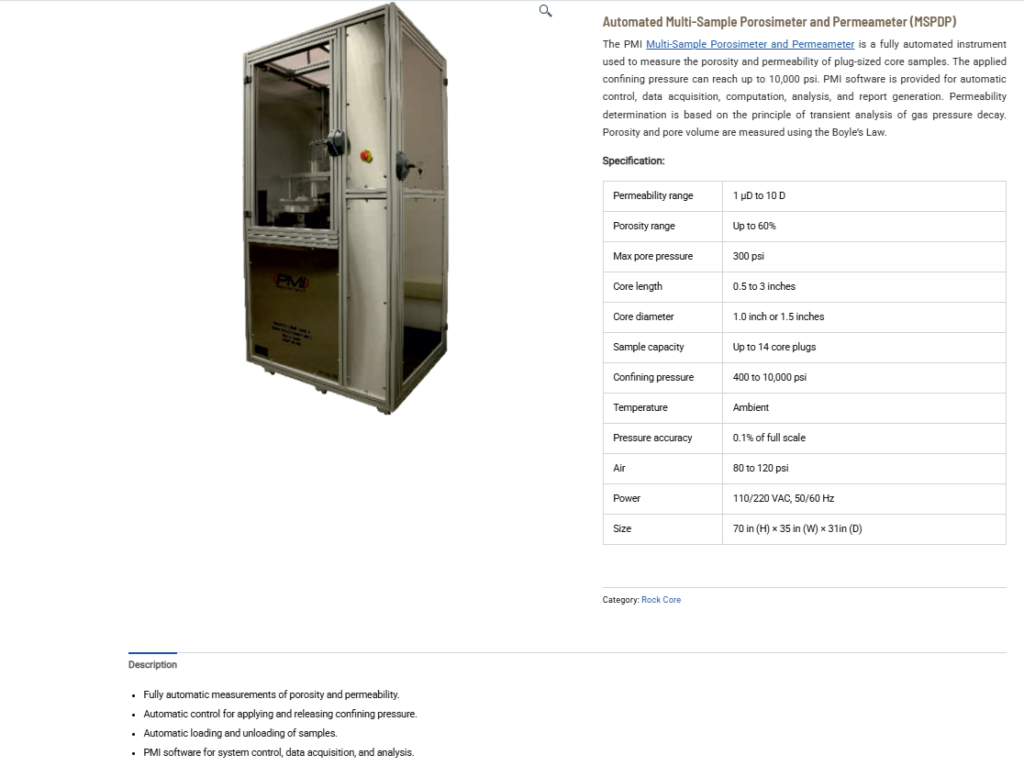
The Automated Multi-Sample Porosimeter and Permeameter (MSPDP) is a smart tool for labs. It helps make core tests fast and easy. The MSPDP can look at many rock core samples at the same time. People do not need to help much when using it. Smart software runs all the tests, so the job takes less time. More people can use the MSPDP and get steady results when they study new rock fields.
What Is the MSPDP?
The Automated Multi-Sample Porosimeter and Permeameter (MSPDP) is a tool that works on its own. It lets you see the porosity. You can also check how fluids move through a rock sample about the size of a small plug. The system is made for a busy lab. It holds the samples for you. It also keeps track of the pressure. The system gives results, looks over the data, and makes reports without people needing to help.
The MSPDP measures:
- Porosity and pore volume by using Boyle’s Law
- Permeability by seeing how the gas pressure drops over time
When machines do these steps, the labs can get more work done. The labs can also make sure their results stay good and the same each time.
Why Porosity and Permeability Matter
Porosity
Porosity means the open spaces in a rock. It tells you how much liquid the rock can hold.
Permeability
Permeability is about how easy it is for liquids to pass through small holes in a rock. When the permeability is high, the fluids will move better out of the rock.
Together, these properties are fundamental for:
- Look at the rock and liquid parts in the storage area
- Find and take out oil and gas
- Keep carbon to help lower emissions
- Look at underground water
- Do work to get heat energy from the earth
- Study core pieces for research
Key Features of the MSPDP
1. Fully Automated Testing
The MSPDP does many jobs that people in the lab often do by hand. It uses machines to do these jobs instead of having people do them.
- Load and unload the sample
- Put on and let off the pressure
- Gather the data
- Use the computer to look at the data
- Make the report
Doing things this way makes testing quick. It also helps to cut down changes that can happen when other people do the testing.
2. Multi-Sample Processing Capability
The system can keep up to 14 core plugs at once. This means labs can test more samples at the same time. It helps them do the work faster and with good results.
For companies that have big core analysis programs, this tool can help work flow better. It helps the team get things done faster.
3. Wide Permeability Measurement Range
The MSPDP can measure permeability values from:
1 μD to 10 D
This tool has a big range. You can use it to check many types of rocks. It works well on rocks that do not let much liquid go through. It is also good for rocks that let a lot of liquid pass.
4. Accurate Porosity Measurements
The system can check porosity up to 60%. This helps it give good and steady results for many types of rocks in the earth.
5. High Confining Pressure Capability
With confining pressure control ranging from:
400 psi to 10,000 psi
The MSPDP is able to show what takes place below the ground better than most older lab systems.
6. Advanced Software Integration
Dedicated PMI software will help you have full power over:
- How to use the tool
- How to get data
- Steps for testing
- How to read results
- How to tell others about the findings
This platform brings everything together in one place. It is easy for you to manage your lab. It helps you make sure that things are done the same way every time.
Technical Specifications
| Specification | Details |
|---|---|
| Permeability Range | 1 μD to 10 D |
| Porosity Range | Up to 60% |
| Maximum Pore Pressure | 300 psi |
| Core Length | 0.5 to 3 inches |
| Core Diameter | 1.0 inch or 1.5 inches |
| Sample Capacity | Up to 14 Core Plugs |
| Confining Pressure | 400 to 10,000 psi |
| Operating Temperature | Ambient |
| Pressure Accuracy | 0.1% of Full Scale |
| Air Supply | 80 to 120 psi |
| Power Supply | 110/220 VAC, 50/60 Hz |
| Dimensions | 70 in (H) × 35 in (W) × 31 in (D) |
Benefits of Automated Core Analysis
Increased Laboratory Productivity
When labs use machines that can test a lot of samples at once, they make the slow steps shorter. This helps them get more work done and finish the job faster.
Improved Data Consistency
Automated pressure steps help to cut down on mistakes made by people. This makes the results steady over time. You can feel sure about what you get each time.
Reduced Operational Costs
Automation cuts down on manual work. This gives the lab team more time to look at the data and do deeper checks.
Faster Decision-Making
Researchers and engineers can collect data and get reports fast. This helps them make development choices in an easier way.
Applications of the MSPDP
Oil and Gas Reservoir Characterization
Look at porosity and permeability to see how good the site is. This helps you make better plans for getting oil or gas out.
Carbon Capture and Storage (CCS)
Look at the rock shapes to see if they are good for keeping CO₂ in for a long time. You want to make sure the CO₂ stays in one place and will not come out. This helps keep it safe and makes sure it does not leak.
Geothermal Reservoir Studies
Look at the layers below the ground to see how water, or other fluids, move in geothermal systems.
Academic and Research Laboratories
I help with advanced work in studying rocks, petrophysics, and research in engineering for the oil and gas fields. I work on finding ways to get the most out of oil and gas by using new methods. This can give us new ideas and help us do the job better.
Core Analysis Service Laboratories
Give people the tools they need to do many tests in commercial core analysis work.
Advantages of the MSPDP
The Automated Multi-Sample Porosimeter and Permeameter gives you many good things:
- Runs by itself with no need to be checked all the time
- Handles a lot of samples in less time
- Tests several samples at once
- Measures how much something can take in with a wide range
- Gives the correct results about porosity
- Can show how things act under strong pressure, just like in a storage unit for liquid
- Controls pressure on its own
- Software is built in and manages the process
- A person does not need to step in much
- Looks at all the data and makes reports
Why Choose the Automated Multi-Sample Porosimeter and Permeameter?
Labs need software that is quick and gives good results. People also must have the right tools so that more people can get good results at the same time. The MSPDP helps with these jobs. It uses smart tools, better checks, and software that works well together.
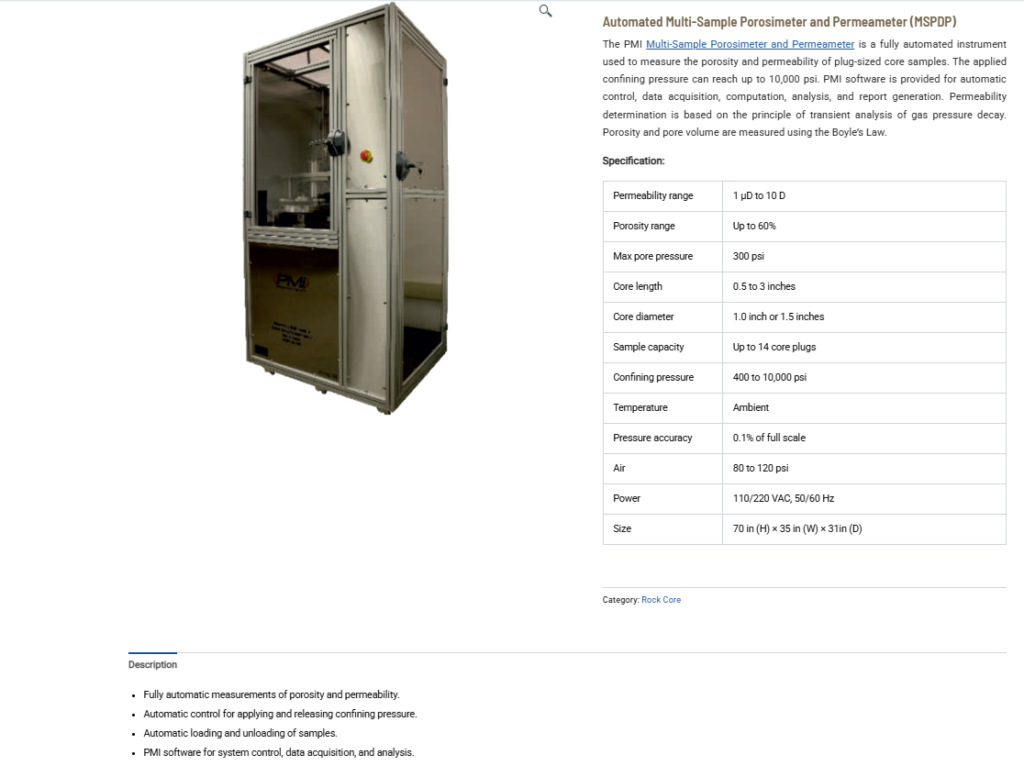
No matter if you work in petroleum exploration, help with development, do research, or study rocks and land, the MSPDP gives you a strong tool to test porosity and permeability. The tool can run many tests at the same time and keeps the results steady and good. It can do hard steps on its own and still gives the best results. This is why the MSPDP is a key tool for any core analysis lab today.
BY: PMIAPP