
Table of Contents
Precision Surface Area and Pore Structure Characterization
It is important to know the surface area, pore size, and how materials adsorb things. This helps in new research and work in many industries. These things can change how good a catalyst is, how much can be adsorbed, how well filters work, how much energy you can save, and how good the product is in lots of fields.
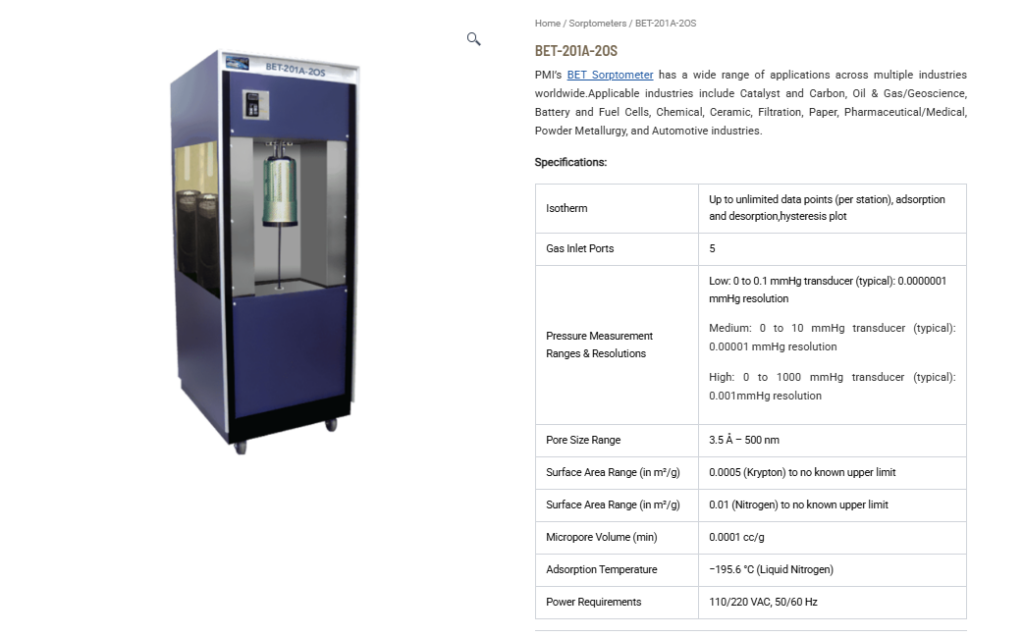
The BET-201A-20S Surface Area and Pore Size Analyzer is a gas sorption tool. It helps you know how gases stick to and leave a surface. It tells you about how big the surface is, how much space is in small pores, and how big the pores are. The system has good sensitivity and gives a wide range of results. So, it works well for research and labs that want to check products.
What Is the BET-201A-20S?
The BET-201A-20S is a top BET surface area and pore size analyzer. It looks at the surface and pore parts of things that have pores by using gas. This tool works by checking how much gas stays on the surface. It lets you get good data about what the thing is like.
The system measures:
- Specific surface area
- Pore size spread
- Micropore amount
- Adsorption and desorption isotherms
- Hysteresis behavior
- How porous the thing is
The system uses pressure to check different materials. It can find small pores and big ones. This makes it good to use for microporous stuff and also mesoporous things.
Why Surface Area and Pore Analysis Matter
How something works can depend on the way people build it inside. It also depends on how much surface there is you can use.
Accurate characterization helps researchers:
- Get better work from catalyst
- Make adsorption materials better
- Make battery and fuel cell tech better
- Build new filtration systems
- Look at activated carbon products
- Make pharmaceutical mixes better
- Look at nanomaterials and porous solids
- Help research in environmental and energy fields
The BET-201A-20S gives you all the details you need. It helps you to see how it works. It also shows you how you can make it better.
Key Features of the BET-201A-20S
1. Advanced Adsorption and Desorption Analysis
The analyzer gives you full graphs for both adsorption and desorption. It also creates hysteresis plots. This helps you look at the pore structure and know how adsorption works, in a way that is easy to see.
2. Unlimited Data Point Collection
The system supports:
You can get as much data as you want about adsorption and desorption at each station.
This lets you make high-res isotherms. It also helps you test the stuff.
3. Exceptional Pressure Measurement Accuracy
The BET-201A-20S has a few pressure sensors. These sensors help it pick up quick changes and give results that are right every time.
Low Pressure Range
- 0 to 0.1 mmHg
- Resolution: 0.0000001 mmHg
Medium Pressure Range
- 0 to 10 mmHg
- Resolution: 0.00001 mmHg
High Pressure Range
- 0 to 1000 mmHg
- Resolution: 0.001 mmHg
This design is good for many ranges. You will get good measurements at each step during the adsorption process.
4. Wide Pore Size Measurement Range
The instrument analyzes pore sizes from:
3.5 Å to 500 nm
This lets you see what small-pore materials are like and what medium-pore materials are like, too.
5. Extremely Sensitive Surface Area Analysis
The BET-201A-20S can measure:
- 0.0005 m²/g when using Krypton adsorption
- 0.01 m²/g when using Nitrogen adsorption
with no known upper measurement limit.
This means you can use the system for both low and high surface area materials.
6. High-Sensitivity Micropore Detection
The analyzer detects micropore volumes down to:
0.0001 cc/g
This text gives info about things that have very tiny holes in them. You will get to know what makes up these materials and why those small pores matter.
7. Multiple Gas Inlet Ports
The system includes:
Five gas inlet ports
This lets you handle gas with ease and gives you more ways to test.
Technical Specifications
| Specification | Details |
|---|---|
| Isotherm Data Points | Virtually Unlimited |
| Gas Inlet Ports | 5 |
| Pore Size Range | 3.5 Å – 500 nm |
| Surface Area Range (Krypton) | 0.0005 m²/g to No Known Upper Limit |
| Surface Area Range (Nitrogen) | 0.01 m²/g to No Known Upper Limit |
| Minimum Micropore Volume | 0.0001 cc/g |
| Adsorption Temperature | -195.6°C (Liquid Nitrogen) |
| Power Requirements | 110/220 VAC, 50/60 Hz |
Pressure Measurement Resolution
| Range | Resolution |
|---|---|
| 0–0.1 mmHg | 0.0000001 mmHg |
| 0–10 mmHg | 0.00001 mmHg |
| 0–1000 mmHg | 0.001 mmHg |
Analytical Methods Supported
The BET-201A-20S can be used with many common tests that people use in the industry.
BET Surface Area Analysis
This shows us the exact surface area. It does this by using the Brunauer-Emmett-Teller method.
Langmuir Surface Area Analysis
It shows how well one layer sticks. It also gives you other values for the surface area.
Micropore Analysis
It lets you see what pore shapes look like when you get up close. This helps people study more about new and advanced things.
Adsorption and Desorption Isotherms
This shows how something can stick to a surface and fill the spaces on it.
Hysteresis Analysis
It looks at the shape of pores and how things stick to them. It also checks how things come off the pores.
Industry Applications
The BET-201A-20S is used in many industries. You can find it in the places below:
Catalysts and Chemical Processing
Look at the catalyst surface size and the shape of its pores. This can help you get better results.
Activated Carbon Manufacturing
Look at the ability of carbon to hold other stuff. Make it work better.
Oil and Gas Industry
Porous materials are often used in the study of how liquid moves through rock and soil. People also use these materials for cleaning water or air. These are the type of materials that have a lot of tiny spaces or holes in them. This is why water, oil, or gas can pass through them.
Some common porous materials are sand, gravel, and some kinds of rock. People also use things like activated carbon and clay for cleaning liquids and gases. These materials are good at trapping tiny bits of dirt and other things we do not want in water or air. This helps clean them.
When people want to know how liquid or gas moves underground or want to make a good water filter, they look at how these materials work. Because they have tiny holes in them, these materials let liquid pass through, but they stop big particles from going with it.
All these uses show why it is important to know about porous materials. They play a big part in learning about how water, oil, and gas move below ground, and in making better ways to clean what people drink or breathe.
Battery and Fuel Cell Research
Look at the size of the surface and the pore details on the electrode. These are important for how well it can store energy.
Pharmaceutical and Medical Industries
Take a look at powders, porous carriers, and materials for drug delivery.
Filtration and Separation Technologies
Look at how the pores are made. Also, see how well the filtration media can pick up and hold other things.
Powder Metallurgy
Let me tell you about metal powders and porous sintered materials. Metal powders are small pieces of metal that look a lot like dust. People use them to make different things by pressing them together then heating them up. After this, they stick to each other and make a solid object. This way is fast and it does not waste a lot.
Porous sintered materials are special solid things made from these metal powders. There are small holes inside them. These holes help let air, gas, or water move through the object. People use these all the time in filters, machines, and even in cars.
Automotive Industry
Get help to make support items for emissions systems and new parts.
Benefits of the BET-201A-20S
Exceptional Sensitivity
You can use Krypton adsorption to measure the surface area of materials that have very low surface area.
Research-Grade Accuracy
The best pressure transducers help you get results you know you can trust.
Broad Measurement Capability
Look at things that range from microporous adsorbents to mesoporous structures.
Flexible Operation
There are several gas ports so you can use them for many tests.
Comprehensive Material Characterization
Get all the data you need on adsorption, desorption, and pore structure.
Suitable for Industrial and Academic Research
This helps with day-to-day checks. It also helps with deeper science work.
Why Choose the BET-201A-20S?
The BET-201A-20S Surface Area and Pore Size Analyzer is a great tool that gives you high sensitivity, good pressure measurement, and gas sorption analysis. It helps you measure surface area, pore size, how much space is in small pores, and how adsorbing works. Labs will find it useful in the fields of catalysis, energy storage, drug development, environmental science, and research of new things.
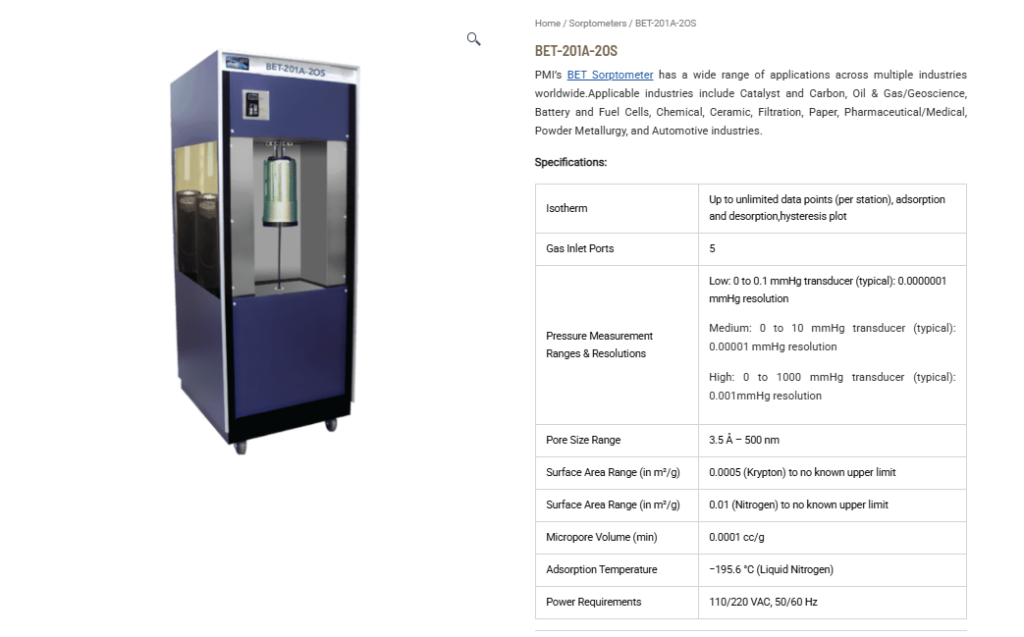
For groups who need easy, steady, and clear checks of the surface, the BET-201A-20S can do the job. It gives all the needed results for today’s study about what things are made of.
CONTENT BY : PMIAPP