
Table of Contents
Introduction
As more places start to use machines for work, people now need ways to control things from far away. They also need things that keep working all the time. The old way of opening valves by hand needs a person to be there. This can slow things down. It can also lead to more mistakes, especially in big jobs.
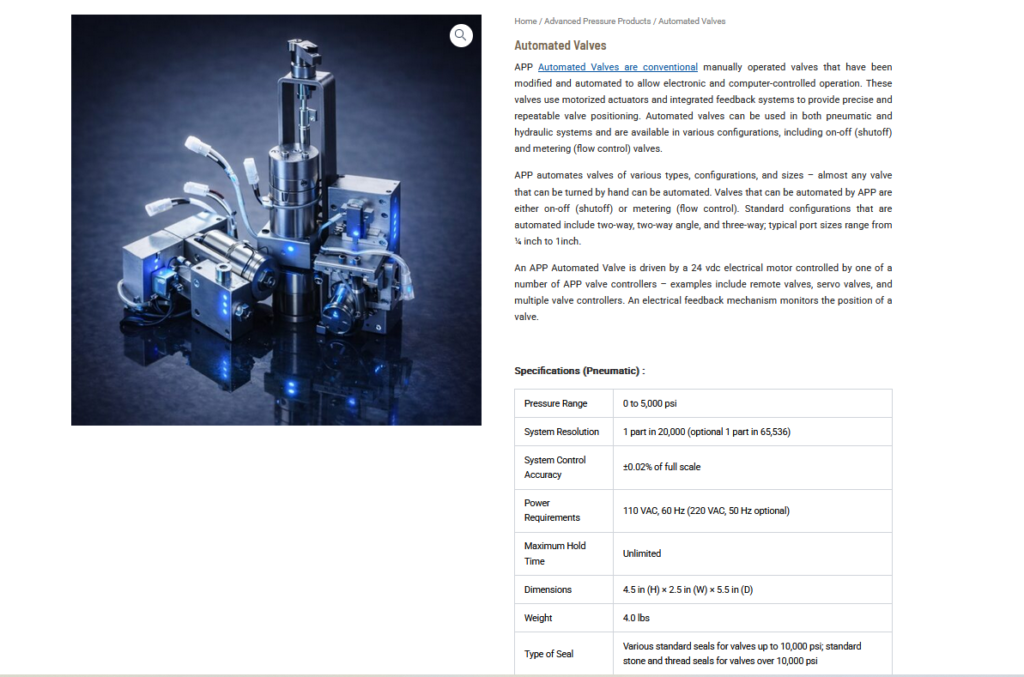
Automated Valves help people at work in a different way. These valves change hand valves into systems that use electric power. These systems give you the same and repeat flow every time. Automated valves use motor power, sensors, and smart parts to make this happen. You can use them in factories, testing tools, labs, and places where things are made.
Automated valves are used in many ways. They help you turn a system on or off easily. You can use these valves to set the pressure and keep the flow steady. When you use them, your work gets better and easier. People make fewer mistakes, and the process works well.
What Are Automated Valves?
Automated valves start out as plain valves that you used to turn by hand. People add electric tools and parts to these valves, so a machine can move them for you. You can use these valves from far away, or let a computer handle them. The main thing is, you do not need to touch or turn the valves. A machine moves them into the spot they need to be. The machines follow steps you set ahead of time, or they can change what they do based on what is happening now.
Automated valves are simple to use in air or liquid power systems. You will find them in many designs. You can choose the one that works best for your system.
Common valve configurations include:
- On-shutoff valves
- Metering flow valves
- Two-way valves
- Three-way valves
- Angle valves
- High-pressure valves
When you use automation along with good valve designs, you get valves that work well and can be counted on. These automated valves do a good job, even in tough work. They help you get the results you want each time.
How Automated Valves Work
Automated valves use an electric motor to move. This motor gets commands from a PLC, a computer, an automation system, or another device.
The process typically involves:
- Getting a command signal
- Starting the motor-driven actuator
- Changing the valve’s spot
- Watching the valve move with feedback sensors
- Making sure the valve is in the right spot
Integrated feedback can check the spot of the valve all the time. It helps to make sure the valve moves the same way each time you use the system. This way, all parts can work well together. You get a good result every time.
This closed-loop setup helps you put the valve in the right place every time. You can use it for easy shutoff jobs. You can also use it for tough flow jobs where things change a lot.
Key Features of Automated Valves
1. Electronic and Computer-Controlled Operation
Automated valves can be turned on or off from a far place by using:
- Industrial systems for control
- PLCs (Programmable Logic Controllers)
- SCADA systems
- Software for lab automation
- Custom platforms to handle controls
This way, people do not have to step in as often. The work can be done by itself with full automation.
2. Precise Valve Positioning
Integrated feedback systems help you find the right valve spot every time. This helps keep flow rates and working conditions steady. When the valve spot stays the same, everything works better and is easier to use.
Benefits include:
- The process is the same every time.
- The system works well.
- There is not much change in the way things are done.
- Production is more right.
3. Wide Range of Valve Configurations
Automated valves work well with many types and sizes of valves, including:
- Two-way flow valves
- Three-way directional valves
- Angle valves
- Metering valves
- Isolation valves
You can make most valves that you use with your hand work on their own. This helps the valve do what the job needs without you doing it every time.
4. High-Pressure Capability
Automated valves do a lot of the tough work when there is high pressure. You can use these valves in:
- Air-powered systems
- Liquid-powered systems
- High-pressure test setups
- Factory process management
The system can handle pressure up to 5,000 psi or more. How much pressure it holds will be different. It depends on the type of valve you use and how you set it up.
5. Reliable Motorized Actuation
The valve assembly has a 24 VDC motor for power. The valve controllers help the system to work well. They also make it easy for people to use. The valve moves in a smooth way. It works right every time.
Available control options may include:
- Remote valve devices
- Servo valve devices
- Multi-valve system setups
- Programmable automation platforms
6. Continuous Position Feedback
Electrical feedback systems always keep track of where the valve is. They let the main system know what is happening.
This enables:
- See what is happening right now
- Check where things are
- Make changes by itself
- Have better safety while working
Applications of Automated Valves
Industrial Process Automation
Automated valves are used in a lot of factories. They help to move liquids, gases, and things with the help of machines. These valves also let people do less work by hand.
Typical applications include:
- Work with chemical processing
- Handle water treatment systems
- Use in oil and gas operations
- Needed for pharmaceutical manufacturing
- Important for food and beverage production
High-Pressure Testing Systems
Testing labs use automated valves. These help to keep the pressure safe and at the right level during:
- Burst testing
- Leak testing
- Pressure cycling
- Pressure holding tests
- Testing to see if the part fits the needed rules
Hydraulic Control Systems
Automated valves help control how liquid moves in these systems. They do this in a simple and good way.
- Machines that people use in factories
- Systems for things that go up in the air
- Machines that move
- Places where people work on science
Pneumatic Control Systems
For jobs that use compressed air, automated valves make things work better in these areas:
- Automated production lines
- Robotics systems
- Laboratory testing equipment
- Instrumentation systems
Research and Development
Engineers and researchers use automated valves when they want the same results for a test every time. These valves also help them manage how a fluid moves during new tests.
Technical Specifications
| Parameter | Specification |
|---|---|
| Pressure Range | 0 to 5,000 psi |
| System Resolution | 1 Part in 20,000 (Optional 1 Part in 65,536) |
| System Control Accuracy | ±0.02% of Full Scale |
| Power Requirements | 110 VAC, 60 Hz (220 VAC, 50 Hz Optional) |
| Maximum Hold Time | Unlimited |
| Dimensions | 4.5 in (H) × 2.5 in (W) × 5.5 in (D) |
| Weight | 4.0 lbs |
| Seal Types | Standard seals for valves up to 10,000 psi; stone and thread seals available for higher-pressure applications |
Benefits of Automated Valve Technology
Increased Efficiency
Automated operation means the system can work by itself. People do not have to fix or change things by hand all the time. This helps the whole system to work better.
Enhanced Precision
Good valve placement helps keep the flow smooth. It also makes sure that the process goes the same way every time.
Improved Safety
Remote work lets people have more time away from risky or stressful places. This helps them feel better and do their work in a way that is good for them.-Binlapisuser
Reduced Maintenance Costs
Working on the valve often can help cut down on wear. This also helps the equipment last longer.
Seamless Automation Integration
Automated valves are not hard to put into old systems. They can work well with the networks that factories have.
Why Choose Automated Valves?
Automated valves make it easy to do your job well. They help you work faster and let you change the way things happen. These valves take normal ones you turn by hand and add electronics to them. When you use automated valves, you can get more work done. You can also see what is going on. They help you make your product better, too.
If you need to move fluid while making things, keep pressure the same during tests, or let machines handle tough jobs in a factory, automated valves can help. They give us steady results that are important in the world today.
Automated valves are an important part of the systems we use today in process and automation. You can set them up with many types of features. These valves can give feedback right away. They also work well when there is a lot of pressure.