
Table of Contents
Cyclic Pressure Control System (CPCS): The Future of Precision Pressure Testing
In factories and other workplaces, people need to see if things work the right way, are safe, and do their job. Pressure testing helps with this. The Cyclic Pressure Control System (CPCS) is a good tool for making sure there are very exact pressure cycles. This helps with things like finding out about wear, knowing about how long something will last, and doing pressure testing many times.
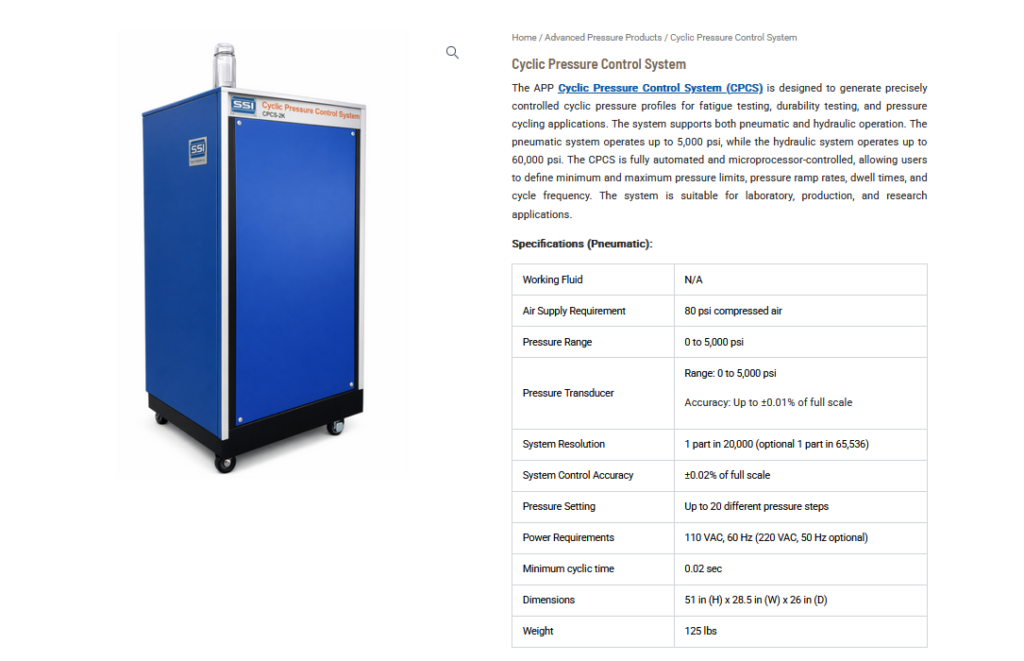
The CPCS can use automated systems. So, you can get good results when you use it. It works with both air-based and oil-based setups. Because of this, the CPCS is useful for people who make things. It also helps in labs and research centers. It helps make sure that everything they make is of the best quality.
What is a Cyclic Pressure Control System?
A Cyclic Pressure System is a test setup that is used often. It puts high pressure to parts, groups, or materials again and again. The system does this many times so it can feel like what happens in real life. This way, engineers can find out how long the product will last. They can also see how well it works and how strong it is.
The CPCS comes with a small computer chip inside. It works on its own. You can set up the system the way you want:
- Minimum and maximum pressure limits
- Ramp rates
- Dwell times
- How often the pressure cycle happens
- Multi-step pressure steps
This setup makes sure the test results stay the same each time. It also helps the results stay steady for things that matter.
Key Features of CPCS
1. High-Precision Pressure Control
The system gives steady pressure that is simple to set. It stays the same, with up to ±0.02% of full scale. This helps you get results you can trust when you test.
2. Flexible Pressure Ranges
The air setup uses pressure that goes from 0 to 5,000 psi. The liquid setup can reach up to 60,000 psi. This means the system is good for big jobs in factories.
3. Automated Testing Cycles
Users can set up many pressure steps and test plans. This helps them do less work by hand. It will make the testing go better and help get it done faster.
4. Advanced Pressure Monitoring
The integrated pressure transducer provides:
- Range: 0 to 5,000 psi
- Can be as close as ±0.01% of full scale
This helps to make sure the measurement and data collection stay good the whole time you are testing.
5. Fast Cycle Performance
The CPCS can change pressure very fast when doing tests. It can make this change in just 0.02 seconds at the shortest. This helps test life and see wear and damage sooner.
Applications of Cyclic Pressure Control Systems
Fatigue Testing
See how the parts work when they face pressure many times as time goes on.
Durability Testing
See how long things keep working. Look for places where problems could start before they sell the products.
Research & Development
Help turn new ideas into real things. Try out products in the way people use them each day.
Quality Assurance
Make sure the parts you make line up with what people in the industry want. The parts must also fit what customers need and use.
Production Testing
Add pressure cycling tests to the steps when you make products. This can help us see that every item will have the same level of quality.
Technical Specifications (Pneumatic Configuration)
| Specification | Details |
|---|---|
| Pressure Range | 0 to 5,000 psi |
| Air Supply Requirement | 80 psi compressed air |
| Pressure Transducer Accuracy | Up to ±0.01% FS |
| System Control Accuracy | ±0.02% FS |
| Resolution | 1 part in 20,000 (Optional 1 part in 65,536) |
| Pressure Settings | Up to 20 pressure steps |
| Power Requirements | 110 VAC, 60 Hz (220 VAC, 50 Hz optional) |
| Minimum Cyclic Time | 0.02 sec |
| Dimensions | 51″ H × 28.5″ W × 26″ D |
| Weight | 125 lbs |
Benefits of Using CPCS
Improved Product Reliability
Find problems early. Make your product design better before people start to use it.
Reduced Failure Risks
Pressure cycling tests let us see where things might break before they really do. This can help stop big problems from happening. It also saves money when you are out in the field.
Enhanced Compliance
You can meet industry testing standards by making sure your tests are right and can be done the same way every time.
Increased Productivity
Automated testing helps people run tests without much work. It lets things get done faster.
Cost Savings
Find problems while you work on development. Do not wait until the products are out with people.
Why Choose an Advanced Pressure Cycling System?
Today, many industries need testing tools that let them change pressure fast and in a steady way. A Cyclic Pressure Control System helps with this, as it makes handling pressure easy. You can use this system for many kinds of work in factories, like these:
- Aerospace
- Automotive
- Oil & Gas
- Medical Device Manufacturing
- Industrial Equipment
- Research Laboratories
- Parts making for water powered machines
CPCS systems help groups by using real life situations. This makes their products better. These systems also help cut down on warranty claims. They make it easier for people to come up with new ideas and do it faster.
Conclusion
The Cyclic Pressure Control System (CPCS) is a good tool for those who do tests with pressure changes, check for wear, and see how strong things are. The system uses new automation and it has many ways to set up. With CPCS, people who make things and people who do research can get good results when they test. It can also help them make their products better and safer.
It does not matter if you work in a lab, check parts at your job, or need to make sure things are right when things are made. A CPCS will give you what you need for hard testing at work now. It helps you do your job well and get results that are correct.