
Table of Contents
Introduction
Polymer science matters a lot in today’s factories. It brings new things to coatings, glues, clothes, medicine, packaging, nanotechnology, and more. To make strong polymers that work the same way every time, people must watch how they are made. This means they need to control the temperature, pressure, mixing, and air.
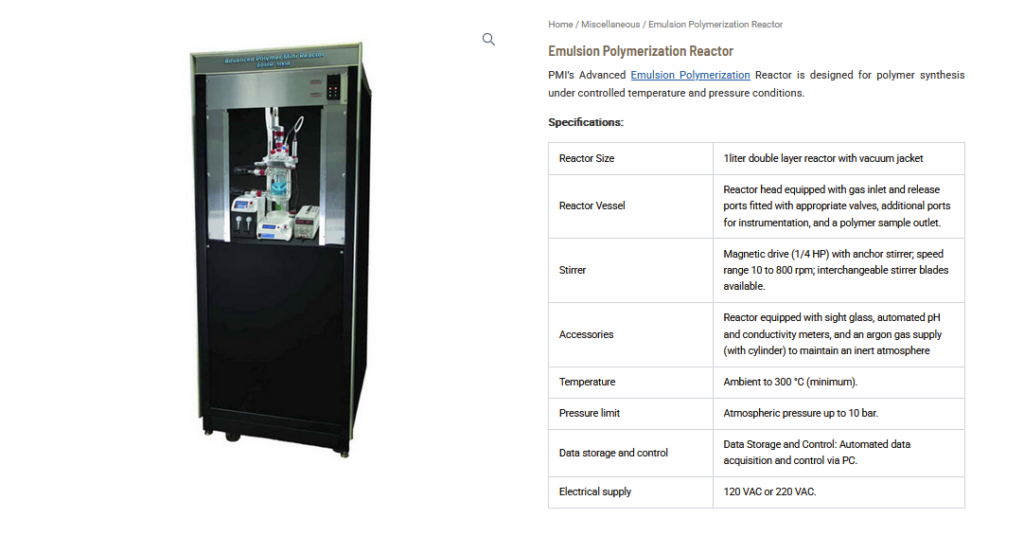
The Emulsion Polymerization Reactor from PMI is a lab tool made to help you make polymers. You can set it up and watch how the process happens. It has automatic controls, temperature options, gas use features, and built-in systems that track all steps. This reactor lets people and groups try different ways and make emulsion polymerization better.
What is Emulsion Polymerization?
Emulsion polymerization is a common way to make polymers. In this method, monomers mix with water. Surfactants be used to help the monomers stay spread out. The polymerization will happen when initiators get added.
This way to do things has many good points when you look at old ways of making polymers. These are:
- Better heat management
- Faster rates
- High molecular weight polymers
- Lower viscosity during processing
- Improved product quality
- Enhanced scalability
Emulsion polymerization is often used to make:
- Acrylic emulsions
- Latex products
- Synthetic rubber
- Water-based coatings
- Adhesives
- Special polymers
- Nanoparticle dispersions
Overview of PMI’s Emulsion Polymerization Reactor
The PMI Emulsion Polymerization Reactor lets you control how polymerization happens. You can do experiments and the reactor keeps the temperature and pressure steady. The system helps you watch important parts of the process all the time.
The reactor uses advanced tools, automatic systems, and a strong vessel. These things work together to help make polymer that is always the same and reliable.
No matter if you use it for research, create a new product, or improve factory work, the reactor gives you the results you need for new polymer tasks.
Key Features of the Emulsion Polymerization Reactor
Controlled Polymer Synthesis
The reactor gives a safe and stable place to do polymerization reactions. It holds the same working setting all through the process.
Benefits include:
- Better response handling
- Higher product sameness
- More repeatability
- Faster research speed
Double-Layer Reactor with Vacuum Jacket
The system has a 1-liter reactor vessel with two layers. It also has a jacket that helps keep the temperature steady when the polymer starts to form.
Advantages include:
- Even spread of heat
- Better hold of heat over time
- Easier to manage how things change
- Less loss of heat
It’s important to keep the same temperature. This helps to get the right features for the polymer. It also helps with the speed of the chemical changes.
Advanced Reactor Vessel Design
The reactor vessel comes with a reactor head. This head is made for certain use and has:
- Gas ports where the gas comes in
- Ports where the gas goes out
- Points to connect tools
- Places to take samples
- Valves for safety
This setup lets you work in many ways. It helps keep things safe and makes sure everything is managed.
High-Performance Stirring System
Good mixing is important in emulsion polymerization. It helps spread the monomers, surfactants, and initiators so they are even everywhere.
The reactor features:
Magnetic Drive Stirrer
- 1/4 HP motor
- Anchor-type stirrer
- Adjustable speed knob
Speed Range
10 to 800 RPM
The system uses stirrer blades that you can change. This helps you work with different needs. The system can handle both thick and thin fluids.
Integrated Monitoring and Process Control
The reactor now has new tools. These help you keep track of the important parts in the process.
Automated pH Measurement
Ongoing pH tracking helps make the process work better. It also helps the polymer have good quality.
Conductivity Measurement
Conductivity monitoring lets you see changes as time goes on. This can show you what happens in the system and how it works.
Sight Glass Observation
A built-in sight glass lets people see what is going on as things change, and they can watch this happen in real time.
Inert Atmosphere Capability
Many polymerization reactions need to happen where there is no oxygen. This stops unwanted side reactions. It also helps make sure the product is the same each time.
The reactor includes:
Argon Gas Supply System
The built-in argon gas keeps the air still. This makes it safe for the whole polymerization process.
Benefits include:
- Less oxidation
- Better quality of polymer
- More steady process
- Better process management
Wide Operating Temperature Range
The reactor supports temperatures from:
Ambient Temperature to 300°C (Minimum)
This wide range of temperatures helps people study all kinds of polymerization reactions. They can also look at different ways the process works.
Applications include:
- Making acrylic polymer
- Making styrene polymer
- Making copolymer
- New product development
Pressure Capabilities
The system operates from:
Atmospheric Pressure to 10 Bar
This setup helps people in this field see how polymerization happens at different pressures. The work is safe while they do it.
Automated Data Acquisition and Control
Today, there is a need for good process monitoring and data collection in modern polymer research.
The reactor includes:
PC-Based Automation
Features include:
- Automated data gathering
- Real-time watching
- Process checking
- Data saving
- Experimental record keeping
Scientists can see each step in what happens all the time. They can also keep full records of every test. This helps them study it and make it better.
Technical Specifications
| Specification | Details |
|---|---|
| Reactor Size | 1-Liter Double-Layer Reactor with Vacuum Jacket |
| Reactor Vessel | Reactor Head with Gas Inlet/Release Ports, Instrumentation Ports, and Polymer Sampling Outlet |
| Stirrer | Magnetic Drive (1/4 HP) with Anchor Stirrer |
| Stirrer Speed Range | 10–800 RPM |
| Stirrer Options | Interchangeable Stirrer Blades Available |
| Accessories | Sight Glass, Automated pH Meter, Conductivity Meter, Argon Gas Supply |
| Temperature Range | Ambient to 300°C (Minimum) |
| Pressure Range | Atmospheric Pressure to 10 Bar |
| Data Acquisition | Automated PC-Based Data Storage and Control |
| Electrical Supply | 120 VAC or 220 VAC |
Applications of the Emulsion Polymerization Reactor
Polymer Research and Development
Researchers use the reactor to develop:
- New polymer formulations
- Copolymers
- Functional materials
- High-performance emulsions
Coatings Industry
The reactor supports development of:
- Water-based paints
- Industrial coatings
- Coatings to keep surfaces safe
- Treatments for special surfaces
Adhesives Manufacturing
Suitable for producing:
- Pressure-based adhesives
- Industrial gluing materials
- Water-made adhesive systems
Latex and Rubber Research
Researchers can investigate:
- Making synthetic latex
- Creating elastomers
- Ways to change rubber
Nanotechnology Applications
The reactor is ideal for:
- Polymer nanoparticle making
- Useful nanomaterials
- Managed particle size building
Academic and Industrial Laboratories
Universities and research centers in business use the system for:
- Polymer chemistry studies
- Process improvement
- Scale-up checks
- New product programs
Advantages of PMI’s Emulsion Polymerization Reactor
Precise Process Control
Good use of temperature, pressure, mixing, and air makes sure you get the same results every time.
Enhanced Product Quality
When the conditions stay the same, the polymer will improve. Each batch it makes will not be as different from the others.
Flexible Experimental Design
You can use the system for the polymerization of many types. It can also be used for different research goals.
Automated Operation
Integrated monitoring and data collection help make work easier and faster. This lets people do less by hand. All of this can lead to better and quicker results.
Safe and Reliable Performance
Advanced safety tools and solid build make the lab safe. They help it run for a long time, too.
Why Choose PMI’s Emulsion Polymerization Reactor?
PMI is a big name around the world. It makes tools to help people study many things. These tools are for testing what things are made from. People also use them for looking at polymer science, working with membranes, and checking how things with small holes work.
The Emulsion Polymerization Reactor offers:
- Automated process management
- Wide range for both temperature and pressure
- Built-in tools for checking and study
- Works in an environment where the air does not react
- A mixing system that works very well
- Strong build that meets laboratory standards
- Can be used for all types of research uses
These things make it a good pick for people who work with polymers. It is also good for research areas and labs that work on development in this industry.
Conclusion
The Emulsion Polymerization Reactor from PMI gives people who work with research an easy system to make new types of polymers. You can manage heat well and keep up with changes as they go. The reactor lets you do your work in a safe space. Air will not mess up the process. It can be used for many test setups. This helps you make the best polymer products every time.
Whether you use this advanced reactor system for school research, new products, making things better, or work development, you get the right support you need. It gives steady results and is easy to handle for today’s polymer science needs.
POST BY : PMIAPP