
Table of Contents
Introduction
Knowing how rocks react to electricity is important in petroleum engineering, geophysics, and understanding underground rocks. People in these fields use resistivity readings to study rock layers. These readings help to know how much fluid is in the rocks. They also show how much oil or gas could be in the rocks.
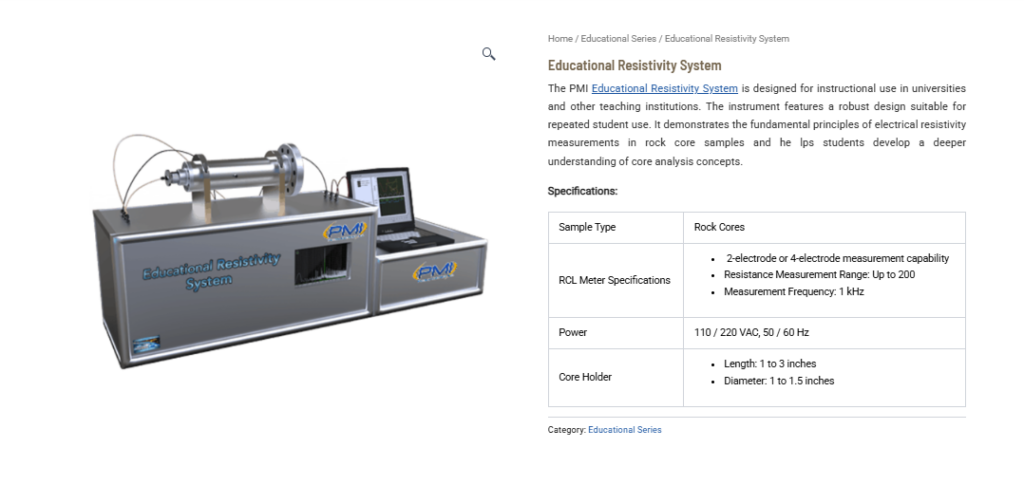
The Educational Resistivity System helps students, researchers, and people who are learning practice real tests. You can use this to see how rock core samples stop the flow of electricity. The tools in the system give results that are easy for you to read. The design is simple, and you will not feel lost when using it. With this system, you can connect what you get in class to the work you do in the lab.
What is an Educational Resistivity System?
An Educational Resistivity System is a tool you use in science labs to teach people. You can see it in colleges, research labs, and places where people get trained. The system lets you find out how to measure the resistivity in rock cores. With this, students can learn how the electrical parts of rocks link to what the rock is like.
When people do hands-on tests, they can see how the rock, the spaces in the rock, fluid amounts, and how easily electricity moves through a thing change resistivity readings. This way helps people know how core tests are used in the energy and geoscience fields.
Why Resistivity Measurement is Important
Electrical resistivity is important when you look under the surface. It helps with:
- Finding hydrocarbon places
- Looking at rock and fluid layers
- Checking how much water is there
- Studying rock and fluid properties
- Studying rocks in the soil
- Testing samples
- Doing research and teaching people
Good resistivity readings help us get the right data. This lets us learn more about the fluid inside rocks and also about what rocks are like deep in the earth. It helps us know more about the area deep below.
Key Features of the Educational Resistivity System
1. Practical Learning Platform
The system lets students do real tests using rock core pieces to check for resistivity. This helps them understand the ideas more easily.
2. Multiple Measurement Configurations
This device works with the two-electrode and four-electrode methods. You can use both ways to see which one is better for you. The device will also show you how good the measurements are.
3. High Measurement Accuracy
The RCL meter shows stable and trusted resistivity numbers. It is a good tool for learning and doing research.
4. Industry-Relevant Training
Students learn how to check oil and gas sites. They also study petrophysics. In addition, they look at rocks and layers under the earth.
5. Durable Laboratory Design
It is built with strong parts that last for a long time. This item will be good to use many times in the lab or when you train. It can handle a lot of use.
Technical Specifications
| Parameter | Specification |
|---|---|
| Sample Type | Rock Cores |
| Measurement Capability | 2-Electrode and 4-Electrode Methods |
| Resistance Measurement Range | Up to 200 Ω |
| Measurement Frequency | 1 kHz |
| Core Holder Length | 1 to 3 Inches |
| Core Holder Diameter | 1 to 1.5 Inches |
| Power Supply | 110 / 220 VAC, 50 / 60 Hz |
Educational Applications
Petroleum Engineering Laboratories
The students get to see how resistivity links to rocks that hold oil and gas. At this time, they also practice the steps used in core analysis.
Geology and Earth Science Programs
The system shows what rocks are made of. It also lets you see how fluids in the small holes inside rocks can change their electrical features.
Petrophysics Training
This lets you practice real resistivity checks. People use these checks to study rock layers. You can also use them to learn more about the place where oil or gas may be found.
Research Institutions
It is good to use for tests where we see how rocks and fluids work with each other. It also helps find out how rocks and fluids move electric signals.
Technical Training Centers
This is good for people who want to get better at their work. It helps them find easy ways to read and use data. You can use this for work in oil and gas fields with engineering too.
Learning Outcomes for Students
With the Educational Resistivity System, students can do these things:
- Know the basics of electrical resistivity.
- Look at 2-electrode and 4-electrode ways to measure.
- Study rock core electrical properties.
- Read and explain lab measurement data.
- Learn how to do tests the way the industry does.
- Link ideas with real-world use.
These skills are good if you want to work in petroleum engineering, geoscience, petrophysics, mining, or environmental studies. They help you in those fields.
Benefits for Universities and Training Institutes
Enhanced Practical Education
Doing lab experiments is good for students. When they do this, they get more involved in the work. They also remember what they learn better.
Industry-Oriented Curriculum Support
The system gives people what they need to know now in engineering and petrophysical studies. It makes sure they get the right knowledge for their work.
Reliable and Repeatable Results
The tools help students see regular results when they take tests. This shows that the data they get stays the same each time.
Long-Term Educational Investment
It is strong and made to last a long time. You can use it for many years in the lab.
The Role of Resistivity in Modern Reservoir Analysis
Resistivity tests are still one of the best ways to see what is under the soil. People like engineers and geoscientists use these numbers to know how much fluid is there. They find good places for work and make plans for what to do in these areas.
The Educational Resistivity System helps students practice tests. It lets them see real problems to learn about rocks found below. Students look at rock samples. They get to know the small spaces inside these rocks.
Conclusion
The Educational Resistivity System is great for teaching and training in petroleum engineering, earth science, geophysics, and core analysis. It lets you learn by doing hands-on experiments. You can see how electrical resistivity works in practice. With this system, students and teachers practice in the lab. This helps them know more about rock properties.
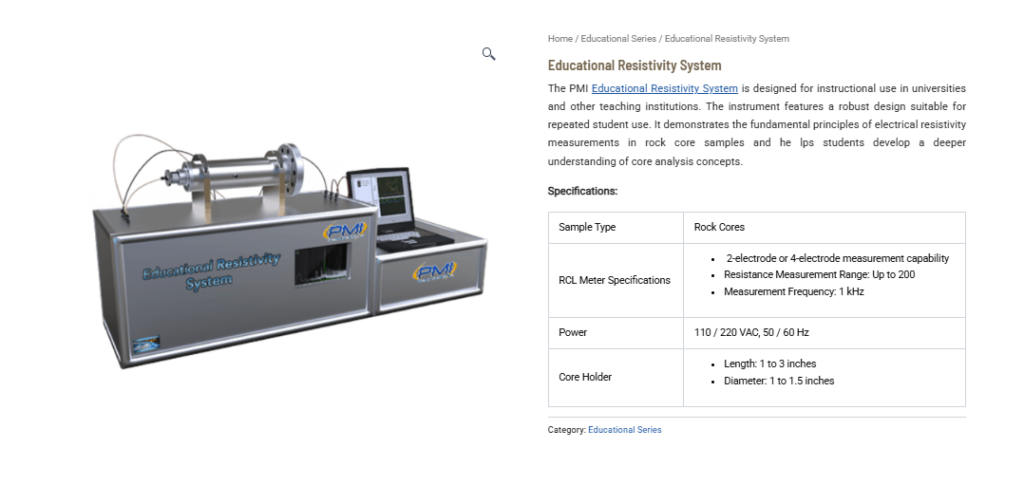
The system is good for learning. It helps people who are in universities, research centers, or places where you get technical training. With this system, you can find out how resistivity measurement works. You can also use it to look for underground water or oil. This is a simple and interesting way to get the basics.
BY: PMIAPP