
Table of Contents
Understanding Gas Permeability in Core Analysis
Gas permeability is a key rock property in petroleum engineering. People use it to study rocks and storage spaces. It tells us how easy it is for gas to get through rock with small holes. This can affect how much oil or gas we get. It also changes how water moves below the ground and helps when storing carbon.
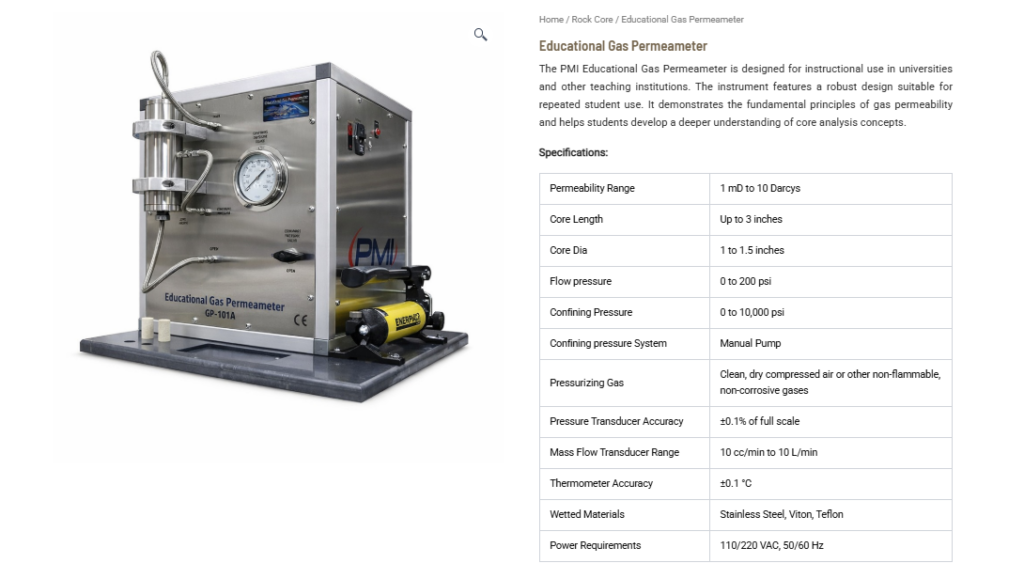
If you are a student or someone who does research, learning about gas permeability is not only about reading it in books. You should practice and do simple experiments so you really understand it. You also need to watch how pressure, the flow rate, and the parts inside rocks can change the way fluids move through the holes in the rocks. The Educational Gas Permeameter is great for this. It gives people ways to learn and practice using their hands.
What is an Educational Gas Permeameter?
An Educational Gas Permeameter is a tool you can use in schools, colleges, and labs. Students use it to learn how gas can move. It helps them check how gas goes through small pieces of rock. This tool gives them practice in core analysis.
The system gives you the main points of Darcy’s Law. It helps you see how gas moves through materials with small holes. You can use it to measure the pressure of gas. It also lets you find out the permeability. The system is made to be strong and last long. Students can do many tests with it. This makes it good for use in classrooms and labs.
Key Features of the Educational Gas Permeameter
1. Hands-On Learning Experience
Students can watch how gas moves in pieces of rock. They can also check what is happening. This helps them see how what they learn in class works in real life.
2. Accurate Permeability Measurements
The tool can show how much goes through many kinds of rocks. This can help people look at some rock samples and see how the reservoir works.
3. Controlled Pressure System
The equipment lets you set the flow. It helps you keep the pressure at the right level. This helps you make real situations like what happens below the ground in a spot where oil or gas is kept.
4. Durable Construction
The system is made with strong stainless steel. It also has parts that do not break when you use chemicals. This system will last for a long time in any lab.
5. Educational Demonstration of Core Analysis Principles
The instrument helps students understand:
- Darcy’s Law
- How gas moves in rock with small spaces
- What the rock is like in the place that has gas or oil
- How pressure and flow relate to each other
- How to look at a small part of rock
- How to read and use what the lab finds
Technical Specifications
| Parameter | Specification |
|---|---|
| Permeability Range | 1 mD to 10 Darcys |
| Core Length | Up to 3 inches |
| Core Diameter | 1 to 1.5 inches |
| Flow Pressure | 0 to 200 psi |
| Confining Pressure | 0 to 10,000 psi |
| Confining Pressure System | Manual Pump |
| Pressurizing Gas | Clean, dry compressed air or other non-flammable gases |
| Pressure Transducer Accuracy | ±0.1% Full Scale |
| Mass Flow Transducer Range | 10 cc/min to 10 L/min |
| Thermometer Accuracy | ±0.1°C |
| Wetted Materials | Stainless Steel, Viton, Teflon |
| Power Requirements | 110/220 VAC, 50/60 Hz |
Applications in Education and Research
Petroleum Engineering Programs
Students learn to look at the way liquids move through rocks. They also see how these changes can affect how oil or gas comes out.
Geology and Earth Sciences
The equipment shows how fluid can move in rocks and the other layers under us.
Research Laboratories
Researchers can do early tests to find out how things move through rock. They also check how the rock and the liquid work with each other.
Technical Training Centers
People who work in the field and people who are still learning can get real practice with lab tests and core checks.
Benefits for Universities and Training Institutes
Improved Learning Outcomes
Hands-on practice helps students get the main ideas of analysis. It also helps them remember these ideas for a longer time.
Industry-Relevant Training
Students get to know about ways that people use a lot in oil and gas. They also learn what is used in environmental engineering and jobs in geoscience.
Safe Laboratory Operation
The system is safe to use. It is easy for people to get started with it. The system helps you learn better in schools and other places.
Cost-Effective Laboratory Equipment
It is strong and lasts a long time. You can use it without any trouble. The good thing is you do not need to do much to keep it working. You get many years of good learning and value from this.
Why Gas Permeability Testing Matters
Permeability testing helps to find out how well the soil or rock lets water or other fluids move through it. This is important for knowing how safe and stable the area is. Engineers and geoscientists look at this information for these reasons:
- Try to say how much oil or gas can come out of the earth.
- Find the best way to drill and finish the job.
- See how well new ways to get more oil or gas will work.
- Look at how water moves under the earth.
- See if carbon capture and storage plans will work.
When students use an Educational Gas Permeameter, they can see how these ways work. These tools help you know how rock layers act under the earth. They are also good for people who work in subsurface engineering.
Conclusion
The Educational Gas Permeameter is good for schools and training centers. It works well for places that teach petroleum engineering, earth science, and core study. With this tool, students get to work with their hands. They use real tools that give clear results. This helps them learn how gas moves in rocks and other things.
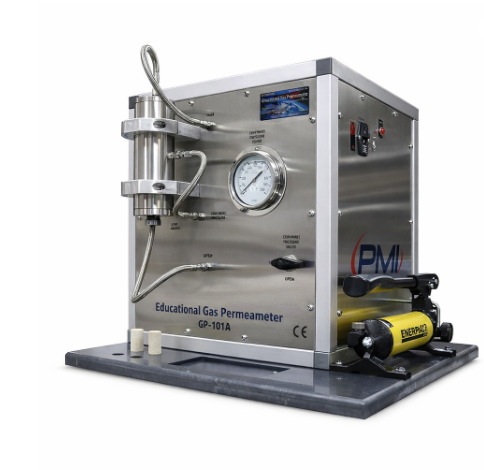
You can use this equipment in your classroom, lab, or where you do research. It helps you learn the main ideas in core analysis and lets you work with oil and gas beds. This will also help you get the skills you need for jobs or tasks in real industry work.